
Defensible space is one of the most important steps Park City and Heber City property owners can take to reduce wildfire risk around a home, cabin, rental, or ski resort property. In mountain communities where homes sit close to forest fuels, steep slopes, timber, and seasonal wind, a well-planned defensible space does more than clear brush. It slows fire spread, reduces ember ignition points, improves firefighter access, and gives a home a better chance of surviving a wildfire. For local property owners in the Wasatch and Uinta Mountains, this work is most effective when it combines smart vegetation management, regular upkeep, and practical site planning tailored to steep terrain and the realities of living near the ski resorts of Park City. Canyon Cutters, a locally owned and operated Park City arborist team, helps homeowners apply these principles with on-the-ground fire mitigation, tree care, hauling, chipping, and property rehabilitation built for mountain conditions.
Table of Contents
- What Defensible Space Means for Park City and Heber City Homes
- Why Defensible Space Matters on Mountain and Ski Resort Properties
- The Three Working Zones of Defensible Space
- How to Manage Trees, Brush, Needles, Grass, and Ladder Fuels
- Defensible Space on Steep Slopes, Wooded Lots, and Ski Access Properties
- Firewise Landscaping for Utah Mountain Properties
- Home Hardening and Defensible Space Work Best Together
- Access, Emergency Preparation, and Neighborhood Coordination
- A Year Round Defensible Space Maintenance Calendar
- What You Can Do Yourself and When to Hire a Pro
- Why Canyon Cutters Is a Strong Local Partner for Defensible Space Work
- Common Defensible Space Mistakes to Avoid
- FAQs About Defensible Space in Park City and Heber City
What Defensible Space Means for Park City and Heber City Homes
Defensible space is the managed area around a structure where vegetation, debris, and other combustible materials are reduced or arranged to make wildfire less likely to ignite the building. It is not the same as stripping a property bare. It is a planned, maintained buffer that keeps fuels from carrying flames directly to a house and limits the places where embers can start spot fires.
That idea lines up with the National Fire Protection Association guidance on preparing homes for wildfire, which breaks the area around a home into practical ignition zones, and with the Ready.gov wildfire preparedness guidance, which emphasizes defensible space, home maintenance, and emergency planning as part of one larger strategy.
For Park City and Heber City homeowners, defensible space should be thought of as a living system. Trees continue to grow. Needles drop. Ornamental shrubs fill in. Irrigated beds dry out later in the season. Snow damage creates broken limbs. Wind throws deadfall into drainages and fence lines. A property that looked safe in June can become much more vulnerable by late August if it is not maintained.
Defensible space also needs to reflect local conditions. Canyon Cutters focuses on homes and properties located on and near the ski resorts of Park City, where narrow access, steep grades, retained slopes, mature conifers, and close proximity between homes can change how wildfire risk shows up on the ground. That is why many owners pair routine upkeep with dedicated fire mitigation services, tree pruning, and targeted tree removal when a site has too much density, dead wood, or hazardous growth near structures.
A good defensible space plan should answer a few simple questions. What can burn right next to the structure? How can flames move from the ground into shrubs, decks, trees, eaves, or siding? Where can embers collect? Can emergency crews access the site? Are fuels continuous, or are they broken into smaller, less intense patches? Once you start looking at the property through those questions, the work becomes much clearer.
Why Defensible Space Matters on Mountain and Ski Resort Properties
Mountain homes in Park City and the greater Wasatch Back are beautiful because they sit close to the landscape. That same benefit creates risk. Trees often grow near roofs and decks. Native slopes may carry dense brush, oak, conifers, and dry grasses. Snow loads can snap branches or leave weakened trees leaning toward structures. Wind can push embers uphill, across drainage corridors, or into rooflines and gutters.
The Utah Division of Forestry, Fire and State Lands wildfire community preparedness resources stress that wildfire safety is a shared responsibility, but property-level action still matters most. In other words, community planning helps, local response helps, and codes help, but the condition of the home and the space immediately around it often decides whether a structure is easier or harder to defend.
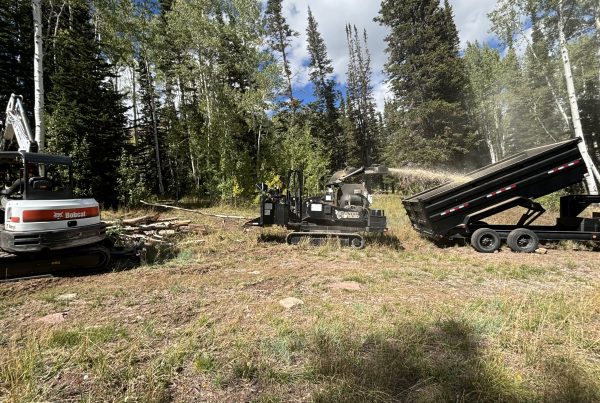
That point is especially relevant for homes near Park City ski resorts, where terrain can limit turnaround space, delay equipment movement, or make manual fuel work the only realistic option in some sections of a lot. Canyon Cutters is built around that kind of terrain. Through its full service arborist and land care work, the company handles wood chipping, land management, fire mitigation, tree pruning, stump grinding, dump truck hauling, trail clearing, storm cleanup, and property rehabilitation that fits steep mountain access.
Defensible space also matters because wildfire is not only a summer issue. In Park City, the work is often shaped by what winter leaves behind. Heavy snow can create broken tops, hanging limbs, and damaged understory growth. Spring runoff can expose roots, create erosion, and move woody debris into low areas. Dry late summer conditions then turn that material into fuel. This is one reason why defensible space should be viewed as a year round property management priority, not a one-time brush clearing event.
Another reason is that defensible space protects more than the main home. Detached garages, guest houses, decks, fencing, stair systems, outdoor furniture areas, wood piles, and even ski-in or ski-out access trails can influence how fire moves. The result is that mountain property owners often need a broader site strategy, not just a quick cleanup near one wall of the house.
For a local picture of wildfire readiness, Park City property owners can also review Be Ready Park City and the Park City Fire District Ready, Set, Go program. Both are useful because they connect defensible space work to evacuation planning, alerts, and the practical decisions residents must make when smoke or fire activity increases.
Many homeowners first approach this work because they want to meet insurance expectations, feel safer, or clean up a neglected lot. Those are good reasons. But the deeper value is that defensible space changes fire behavior around the structure. It lowers fuel continuity, reduces flame length near the building, gives embers less to ignite, and improves the odds that firefighters can safely take action if a wildfire approaches.
The Three Working Zones of Defensible Space
Most modern wildfire guidance organizes defensible space in zones. This is useful because not every part of the property should be treated the same way. The area touching the house needs the strictest controls. Areas farther away can allow more vegetation, but only if spacing, maintenance, and fuel continuity are managed well. The zone framework described by NFPA’s wildfire fact sheet on home ignition zones is a practical way to understand this.
Zone 0, the first 0 to 5 feet
The most important part of defensible space is the area immediately next to the home. Many wildfire resilience programs now emphasize a noncombustible 0 to 5 foot zone because embers often land and smolder right where the house meets the landscape. The Insurance Institute for Business and Home Safety explains the near-building noncombustible zone as a key barrier against ember ignition, and the NFPA Immediate Zone fact sheet makes the same point in practical terms.
In this first zone, the goal is simple. Do not give embers an easy place to start a fire. That means removing dead leaves, pine needles, bark mulch that can ignite, dried ornamental plants, stacked firewood, stored lumber, outdoor cushions that stay next to the siding, and anything else that can trap heat or flames against the structure.
Use rock, gravel, pavers, mineral soil where appropriate, or other noncombustible materials close to the home. Keep the underside of decks free from debris. Make sure stairs, corners, retaining walls, and narrow planting beds are not collecting leaf litter. If a fence touches the structure, think carefully about how that fence could carry fire to the building. If shrubs are planted directly under windows or under eaves, they deserve close review.
This is also the place to look up, not just down. Branches should not overhang roofs or scrape siding. Needles and leaves should not collect in gutters. Roof valleys, deck corners, and areas behind chimneys or roof transitions are classic ember collection points. The Ready.gov wildfire page specifically highlights roofs and gutters because ember ignition often starts there rather than from a wall of flames.
For many Park City homes, Zone 0 gets overlooked because homeowners focus only on forest edge thinning. Yet the area right against the house often contains decorative beds, edging, stored materials, and deck details that matter even more during an ember storm. In practical terms, cleaning and redesigning this first 5 feet can deliver some of the highest value wildfire mitigation work on the property.
Zone 1, the 5 to 30 foot area
The 5 to 30 foot zone is where you start separating fuels and reducing intensity. This area should be lean, maintained, and intentionally planted. It does not have to look barren. It does need to avoid dense, continuous, or highly flammable vegetation. The goal is to keep fire on the ground from easily reaching the house and to stop flames from climbing into tree canopies.
In this zone, prune tree limbs to reduce ladder fuels. Remove dead branches, small volunteer conifers under mature trees, and tightly packed shrubs that form an unbroken wall of fuel. Separate plant groupings so fire cannot run from one clump to another without losing intensity. Keep lawns and grasses trimmed where appropriate. Remove dead leaf litter from beds and beneath shrubs.
Utah State University Extension’s Firewise Landscaping basics explains that defensible landscapes are low in fuel and keep fire far enough from the structure that firefighters have a better chance to defend it. That guidance is especially useful in Utah because it balances wildfire safety with real landscape conditions rather than assuming every property is flat, open, and easy to irrigate.
This middle zone is often where Canyon Cutters helps homeowners make the biggest visual and safety improvements. A property may not need major tree removal near the house, but it may need selective pruning, understory thinning, chipping, small tree removal, haul-off, and a cleanup of decades of accumulated needles and deadfall. In those cases, pairing wood chipping with corrective pruning can open up the site without destroying privacy or mountain character.
The 5 to 30 foot zone should also include close attention to propane tanks, grills, detached steps, pergolas, sheds, and exterior storage. If these are combustible or surrounded by dry vegetation, they can become ignition points or spread paths. Defensible space is strongest when every element in this area is considered as part of one connected system.
Zone 2, the 30 to 100 foot area and beyond
The outer zone is where you manage the larger fuel picture. This area usually includes forest edge, native vegetation, slopes below or above the house, side yard drainages, and the wooded portions of larger lots. The work here is less about making the landscape look manicured and more about changing how fire moves through it.
In this zone, the focus shifts to reducing fuel continuity, removing dead standing material where appropriate, spacing tree groups, thinning dense patches, reducing heavy brush concentrations, and breaking up the path a wildfire could take toward the home. The U.S. Forest Service Fire Adapted Communities guidance notes that defensible space provides a buffer for the structure and a place for firefighters to work if the home is defendable.
On larger mountain properties, this is often where fire mitigation overlaps with broader land management. Owners may need hazard tree work near access roads, thinning along ski access corridors, drainage cleanup, deadfall removal, or brush reduction in transition zones between landscaped areas and open forest. Canyon Cutters handles this type of work through its fire mitigation services, cleanup and recovery work, and hauling support for material that should not remain onsite.
Do not assume the 100 foot distance is always the final answer. Slope, exposure, vegetation type, and property configuration matter. On steeper slopes or heavily vegetated lots, the effective treatment area may need to extend farther, especially downhill from the structure where fire can run uphill with more intensity. This is one reason a site-specific walkthrough is so valuable.
A common mistake in Zone 2 is to thin the obvious brush but leave the connected understory. Another is to remove a few trees while leaving enough dead wood, low limbs, and packed saplings for fire to keep climbing. Real defensible space in the outer zone is not random cutting. It is pattern-based fuel reduction that changes spacing, continuity, and access.
How to Manage Trees, Brush, Needles, Grass, and Ladder Fuels
Vegetation management is the day-to-day heart of defensible space. Every property has fuel. The question is whether that fuel is arranged in a way that helps or hurts the structure. Managing fuels does not always require removing mature trees. In many cases, it means reducing the connections between surface fuels, shrubs, low branches, and the canopy.
Ladder fuels deserve special attention. These are the materials that let fire move upward, from grass into shrubs, from shrubs into low limbs, and from low limbs into the crowns of trees. If a property has tall dry grass under dense evergreens, juniper-like shrubs beneath window lines, or clusters of small conifers under mature pines, ladder fuels are probably present.
For trees, start with dead material. Remove dead limbs, broken tops, dead standing saplings where appropriate, and trees that are failing or leaning toward structures, access roads, or heavily used outdoor spaces. Then look at crown spacing and lower limbs. In many situations, careful pruning can reduce vertical continuity without stripping the site of all shade and character. Canyon Cutters’ Park City and Heber City tree pruning work is especially useful for mountain homes where appearance, slope stability, views, and wildfire risk all need to be balanced at the same time.
For shrubs, the goal is separation and maintenance. Avoid allowing shrubs to connect directly to the house, to each other in solid masses, or to low tree limbs above. Remove dead stems within the plant. Rake out accumulated litter. If shrubs have overgrown stairs, foundations, or the underside of decks, cut them back or replace them with lower risk plantings.
For grasses and ground fuels, stay ahead of drying patterns. Fine fuels can carry fire quickly, especially on slopes and along sunny edges. Trim grasses where appropriate, remove dead weeds, and pay attention to transition zones where irrigated landscaping ends and native growth begins. These are often the areas where low-intensity surface fire can gain traction.
Pine needles and leaf litter are easy to underestimate because they feel normal in a forest setting. Around a home, they are fuel. They build up on roofs, in gutters, along fences, behind landscape edging, and under decks. They can also blanket planting beds and smolder near the siding long after the main flame front passes. This is one reason routine cleanup matters every season, and why many owners combine seasonal property maintenance with onsite chipping or debris reduction when material begins to pile up.
Wood piles, slash piles, decorative brush stacks, and storm debris should also be addressed quickly. Park City Fire District’s wood chipping service information is a useful reminder that fuel reduction is a community-level priority in the area. If a local program is closed or the pile falls outside program rules, property owners still need a removal plan, and that is where private crews like Canyon Cutters can step in.
Finally, remember that wildfire risk is not only about what is alive. Dead, dying, damaged, and poorly maintained vegetation is often the bigger problem. A beautiful mountain lot can remain beautiful and be much safer, but only if that vegetation is actively managed.
Defensible Space on Steep Slopes, Wooded Lots, and Ski Access Properties
Steep terrain changes everything. Fire tends to preheat and move uphill faster, which means a slope below the house can be more dangerous than homeowners realize. If the downhill side of the property is dense with brush, low limbs, and fallen timber, fire can climb with increasing intensity toward decks, siding, stair runs, and elevated living spaces.
That is one reason mountain defensible space cannot be copied from a flat-lot checklist. Park City homes often include terraced grades, rock outcrops, retaining structures, narrow driveways, and forested edges that make access difficult. In those conditions, treatment priorities should be set by the way fire would likely move across the site, not just by what is easiest to clear.
Ski-in and ski-out properties add another layer. Trails, cut-throughs, access easements, and ski paths can collect woody debris and create narrow corridors lined with trees and brush. If these areas are not maintained, they can become both access problems and fuel pathways. Canyon Cutters specifically handles trail clearing for ski-in and ski-out properties, which makes it easier to combine wildfire mitigation with year-round usability.
Wooded lots often need selective treatment rather than wholesale clearing. A healthy stand of trees can still exist with better spacing, less understory density, and fewer dead or hazardous stems. The key is to reduce continuity. This might mean removing volunteer conifers, thinning patches of brush, limbing lower branches, clearing deadfall from slope breaks, and creating more intentional transitions between landscaped areas and native vegetation.
Drainages and swales deserve close attention too. They can trap dead material, channel wind, and hide dense growth that is easy to miss from the house. The same is true for the uphill side of retaining walls, fence lines, stair systems, and utility corridors. Small tucked-away areas often carry more risk than the open yard because maintenance happens there less often.
On larger sites, defensible space also overlaps with erosion and runoff concerns. Aggressive clearing without a plan can expose soils, destabilize slopes, or create drainage problems after storms. That is why mountain properties often benefit from a crew that understands both fuel reduction and site recovery. Canyon Cutters’ mix of property rehabilitation, hauling, land care, and seasonal mountain property services can help owners reduce wildfire exposure without creating a new maintenance problem after the work is done.
If your home sits above a steep wooded drop, below a dense slope, or inside a complex cluster of structures near a resort neighborhood, site-specific defensible space planning matters even more than the standard checklist. The work can still follow the same principles, but the layout must match how your specific terrain behaves.
Firewise Landscaping for Utah Mountain Properties
Landscaping and defensible space should work together. Many homeowners assume wildfire-safe landscaping means plain gravel and no plants. That is not true. A good firewise landscape can still look polished, mountain-appropriate, and welcoming. The goal is to choose plants and arrangements that reduce fuel continuity and stay manageable over time.
USU’s Firewise Plants for Utah Landscapes is one of the best Utah-specific references because it emphasizes a crucial point: no plant is fireproof, and even firewise plants only perform well if they are properly placed and maintained. That matters in Park City and Heber City, where mountain weather, snow damage, irrigation limits, and sun exposure can change how a landscape behaves through the season.
In general, look for plantings that stay lower to the ground, avoid excessive dead material, and can remain healthy without becoming woody, overgrown fuel masses. Group plants thoughtfully rather than placing them in continuous, touching rows. Maintain separation between shrubs and tree canopies. Remove dead interior growth. Keep litter cleaned out from around crowns and bases. Plants that are kept healthy, thinned, and properly irrigated where appropriate are usually safer than overgrown ornamental masses that have not been touched in years.
Near the house, lean harder into noncombustible surfaces and simple, low-fuel design. As you move outward, you can transition into larger plantings and more naturalized areas, but spacing and upkeep still matter. This layered approach helps preserve the mountain feel while still supporting wildfire resilience.
Avoid common landscape problems such as bark mulch pushed directly against siding, dense evergreen foundation shrubs, dry grasses left standing through late summer, and decorative plantings that create a direct bridge from the ground to window sills or soffits. Also be careful with planters, trellises, stored patio items, and combustible privacy screens close to the home.
For Park City homeowners who are also improving views, privacy, or circulation, landscaping upgrades are a good time to coordinate pruning, removals, and cleanup. For example, a property may need a few high-risk trees removed, several others thinned, and the resulting material chipped or hauled away. Canyon Cutters can connect that work through wood chipping, structural tree pruning, and stump grinding where old removals still leave trip hazards or planting problems behind.
Landscaping choices should also be reviewed against local rules and expectations. If you are building or doing a significant remodel, the Park City Wildland Urban Interface Code page is worth checking because it points owners to a worksheet, voluntary plantings list, and local wildfire preparation resources. That is especially helpful for owners who want their landscape plan, home hardening decisions, and defensible space strategy to line up from the start.
A firewise landscape is not a style. It is a method. If the landscape helps interrupt fire spread, reduces ember hazards, stays maintainable, and fits the property’s conditions, it is working.
Home Hardening and Defensible Space Work Best Together
Defensible space is powerful, but it is even stronger when paired with home hardening. Wildfire does not only spread through flames moving across vegetation. Embers can enter vents, land on combustible decking, collect in gutters, or ignite debris trapped next to walls. That is why the condition of the structure itself matters just as much as the condition of the yard.
The NFPA wildfire preparation guidance and Ready.gov both stress the importance of cleaning roofs and gutters, addressing openings and vulnerable details, and reducing combustible materials at the home edge. For Park City property owners, that means looking closely at roofs, vents, eaves, soffits, gutters, windows, siding transitions, decks, fences, and the underside of attached structures.
If pine needles collect in gutters, clean them. If branches hang over a roof or chimney, prune them back. If the lower edge of a fence can carry flame to the house, consider how to interrupt that path. If the underside of a deck is full of leaves, needles, stored items, or tall dry vegetation, clear it. If a wood pile sits next to a wall for convenience, move it farther away during fire season.
Many Park City homeowners now think in terms of the home ignition zone rather than seeing vegetation work and structural work as separate projects. That is a smart shift. Canyon Cutters already addresses the property side of this through home hardening and wildfire preparation guidance, forest fire safety education, and site services that reduce fuels before they can threaten roofs, decks, and access points.
Home hardening is also where details matter. A homeowner may do an impressive thinning project 80 feet from the structure but leave bark mulch, dead shrubs, and stored lumber directly under a deck. During an ember event, that close-in material can matter more than the outer work. Start near the structure, then work outward.
When defensible space and home hardening are combined, the property becomes safer in layers. The house is less vulnerable to ember entry and close-in ignition. The immediate landscape is less likely to burn next to the structure. The middle zone is less likely to carry intense fire to the house. The outer zone is less likely to feed a fast, direct run toward the structure. That layered approach is the goal.
Access, Emergency Preparation, and Neighborhood Coordination
Defensible space is not only about vegetation. Access and readiness are part of the same wildfire equation. If firefighters cannot reach a property safely, if a driveway is blocked by overgrown trees, or if residents do not know how they will evacuate, the value of vegetation work is reduced.
Begin with the driveway and main approach. Trees should be pruned for clearance where needed. Brush should not narrow travel lanes. Dead or leaning trees near routes in and out of the property should be evaluated. Gates should work properly. Address markings should be visible. If winter snow storage, mud, or runoff commonly reduces access, that should be part of the plan too. On mountain properties, one blocked lane can turn a manageable situation into a serious problem.
Next, think about water access and hydrants where applicable. The Park City Fire District reminder to keep hydrants clear is a simple but important example. If a hydrant serves the area near your property, keep it visible and accessible, especially after snow events. Small maintenance habits like this support the broader defensible space goal.
Preparedness also means communication. Property owners should review Be Ready Park City emergency alerts and resources and keep an evacuation plan in place. Canyon Cutters’ wildfire evacuation planning guide and wildfire emergency kit checklist are also useful ways to connect the physical work on the property with the decisions a household may need to make quickly during fire season.
Neighborhood coordination matters too. A single well-prepared lot helps, but homes in resort communities and wooded subdivisions often influence each other. Shared boundaries, nearby fences, overlapping tree canopies, and closely spaced structures can allow fire to move from one parcel to the next. Talking with neighbors about pruning, cleanup, wood storage, and access routes can raise the resilience of the whole area.
Finally, use local programs when they are available. Park City and the Fire District regularly point residents toward wildfire preparation tools, WUI resources, and chipping support. But if program timing does not match your project or your material volume is too large, private help may be the fastest way to get the work done before conditions worsen.
A Year Round Defensible Space Maintenance Calendar
Defensible space works best when it is maintained on a schedule. Mountain landscapes change too fast for a once-a-year glance. A simple seasonal calendar makes it easier to catch problems before they build into a larger fire hazard.
Spring
Spring is the best time to inspect the property after winter. Look for broken limbs, bent or split trees, deadfall, roof debris, and plant damage caused by snow load. Rake litter from around foundations, steps, decks, and retaining walls. Clear gutters once conditions allow. Assess whether runoff moved material into drainages or against structures. If winter caused enough breakage to create access problems or fuel buildup, schedule cleanup early.
This is also a good time to plan larger work such as thinning, hazard tree removal, stump grinding, trail clearing, or hauling. Canyon Cutters’ service lineup is especially useful in spring because owners often discover that wildfire preparation overlaps with storm cleanup, slope cleanup, and property rehabilitation after snow season.
Summer
Summer is when fuels dry and the details matter most. Keep the 0 to 5 foot area clean and noncombustible. Mow or trim grasses where appropriate. Remove dead branches and weeds. Check that irrigated landscape sections are not accumulating dry dead material under healthy top growth. Continue cleaning needles from roofs and gutters if nearby conifers are active. Reassess any decorative or storage items left close to the structure.
Summer is also a smart time for chipping and haul-off because fuel reduction work can happen before the driest stretch of the season. If a neighborhood program is not active, professional wood chipping support can keep the site moving without leaving slash piles in place.
Fall
Fall is cleanup season. Needles, leaves, and small woody debris build up quickly. Remove litter from gutters, roof lines, decks, stair runs, drainage edges, and corners where wind deposits material. Thin or cut back overgrown ornamental plants before snow pushes them closer to structures. Move firewood to safer locations. Recheck access routes before winter weather sets in.
Fall is also the right time to address hazard trees that may become worse under snow load. If a tree is leaning, cracked, dead, or compromised near a house, driveway, or neighboring property, do not put that assessment off until winter. Canyon Cutters’ tree removal expertise for mountain properties can be especially important when the site is steep or access is tight.
Winter
Winter does not end wildfire preparation. It shifts the tasks. Keep access routes usable. Pay attention to tree failures after storms. Maintain hydrant access where applicable. The Park City Fire District hydrant guidance is a good reminder that snow can create emergency access issues too.
Winter is also a planning season. If snow reveals overgrown branches scraping roofs, poor access around retaining walls, or repeated trouble spots on ski access paths, note those areas for spring work. Canyon Cutters’ snow removal and winter property services can complement year-round defensible space management by keeping routes and work areas visible and safer through the season.
When property owners follow a seasonal cycle like this, defensible space becomes much easier to maintain. Instead of a single large, expensive push every few years, the site stays consistently cleaner, safer, and more manageable.
What You Can Do Yourself and When to Hire a Pro
Some defensible space work is well suited to homeowners. Raking pine needles, cleaning gutters, trimming small grasses and weeds, moving firewood, clearing debris from under decks, and reducing small accumulations of litter near the house are all reasonable DIY tasks for many people.
However, mountain properties often cross the line from simple yard work into technical arborist and land management work much faster than people expect. If the project involves large trees, steep slopes, chainsaw work near structures, heavy material removal, dense understory thinning, hazard tree assessment, haul-off logistics, or access challenges near resort homes, professional help is usually the better choice.
That is especially true when the work affects slope stability, drainage, neighboring properties, fences, retaining structures, or shared access routes. A poor cut, badly planned thinning, or slash pile left in the wrong place can create a new hazard instead of reducing one.
Canyon Cutters is a strong fit for this kind of work because the company is built around the specific conditions of Park City and Heber City properties. Homeowners who need more than light cleanup can use the Canyon Cutters contact page to request an evaluation for fire mitigation, pruning, removals, hauling, or rehabilitation work. That can save time, improve safety, and produce a result that actually supports defensible space rather than just changing how the property looks.
Why Canyon Cutters Is a Strong Local Partner for Defensible Space Work
Canyon Cutters is not a generic tree service. The company is locally owned and operated in Park City, Utah, with a primary focus on homes and property located on and near the ski resorts of Park City. It offers a complete arborist solution for residents of Park City and Heber City and also specializes in forestry applications for fire mitigation work needed in the Wasatch and Uinta Mountains.
That local fit matters because defensible space in this area is rarely a one-service project. A property might need tree pruning to separate canopies, one or two removals to eliminate hazard trees, wood chipping to process slash, dump truck hauling to remove excess material, stump grinding to clear old fuel traps, trail clearing for ski access, and post-work site cleanup to keep the place functional and attractive. Canyon Cutters already brings those services together through its Park City and Heber City service offering.
For property owners dealing with forest edge fuels, dead standing timber, or neglected wooded sections of a lot, the company’s fire mitigation work and fire safety education make it easier to connect practical field work with the broader goal of wildfire resilience.
For homes recovering from wind, snow, or site damage that increased fire risk, Canyon Cutters also handles storm cleanup and property rehabilitation. This is important because wildfire readiness often begins with cleaning up what winter and storms leave behind. A property cannot maintain a strong defensible space plan if storm damage keeps reloading the site with fuel.
If you want to see how the team works in the field, the Canyon Cutters gallery and about page help show the company’s local experience, mountain access capability, and focus on tree care, land management, and fire mitigation.
In short, Canyon Cutters is valuable because it understands the local terrain, the demands of ski-resort and mountain properties, and the fact that defensible space is not one isolated service. It is a connected property management strategy that often requires several services working together at the right time.
Common Defensible Space Mistakes to Avoid
One common mistake is treating defensible space as a one-time project. Even an excellent cleanup loses value if roofs, gutters, beds, and forest edges are ignored for a season or two afterward.
Another mistake is focusing only on the outer edge of the property while ignoring the first 5 feet next to the house. In reality, ember ignition near the structure is often the most urgent issue. If bark mulch, dead shrubs, stored items, or debris remain pressed against the home, outer thinning alone will not solve the problem.
A third mistake is removing random trees without improving spacing, understory density, or ladder fuels. Random cutting can leave the property looking open while still allowing fire to climb and carry. Good defensible space is strategic, not cosmetic.
Overlooking access is another problem. Driveways, gates, ski access routes, hydrants, and turnaround space all matter during an emergency. A site that is hard to enter or exit is harder to defend and harder to evacuate.
Finally, some owners assume defensible space means ruining the mountain feel of the property. Done correctly, it does not. With selective pruning, careful removals, smart plant choice, routine cleanup, and good material handling, a property can remain beautiful while becoming much safer.
FAQs About Defensible Space in Park City and Heber City
How much defensible space do I need around my home in Park City?
Most guidance starts with the area immediately around the structure and then expands outward in zones. Many wildfire programs use a 0 to 5 foot noncombustible area near the home, a 5 to 30 foot lean and maintained area, and an outer treatment area extending to 100 feet or more depending on slope, fuels, and site conditions. On steep mountain lots, site-specific needs can extend beyond a flat 100 foot rule.
Does defensible space mean cutting down all my trees?
No. Defensible space is not clear-cutting. It usually means selective work such as removing dead wood, separating crowns, pruning lower limbs, thinning small trees and dense understory, reducing ladder fuels, and cleaning up accumulated debris. Mature trees can often stay if spacing and maintenance are improved.
What is the most important part of defensible space?
The first 0 to 5 feet from the structure is often the highest priority because embers can ignite combustible materials right next to the house. Cleaning gutters, removing debris, avoiding combustible mulch, clearing under decks, and keeping the base of the structure noncombustible can make a major difference.
Can Canyon Cutters help with more than brush clearing?
Yes. Canyon Cutters offers wood chipping, land management, tree removal, dump truck hauling, fire mitigation, tree pruning, stump grinding, snow removal, clearing trails for ski-in and ski-out access, erosion and drainage support, storm cleanup, and property rehabilitation. That makes it easier to treat defensible space as a full property plan rather than a single cleanup task.
When is the best time of year to do defensible space work?
Spring and early summer are strong times for inspection, pruning, thinning, chipping, and larger fuel reduction work, especially after winter damage becomes visible. However, defensible space is a year-round effort. Fall cleanup, winter access planning, and summer maintenance are all important in Park City and Heber City.
Do I need to think about home upgrades too, or is vegetation work enough?
You should think about both. Defensible space and home hardening work together. A home with clean vegetation zones but debris-filled gutters, vulnerable vents, and combustible materials near decks is still at risk. Wildfire resilience is strongest when the house and the landscape are treated as one system.
How do I know whether I need professional help?
If your project involves steep slopes, large trees, hazard trees, chainsaw work near structures, dense wooded fuel, haul-off needs, or access issues typical of ski-resort properties, it is wise to bring in a professional crew. On mountain sites, safety and proper planning matter as much as the cutting itself.
Where can I learn about local wildfire rules and readiness in Park City?
Start with the Park City Wildland Urban Interface Code page, Be Ready Park City, and Park City Fire District resources such as Ready, Set, Go and the wood chipping program. Those official resources help homeowners connect defensible space work with local expectations, emergency alerts, and practical preparedness steps.
Defensible space is one of the clearest ways Park City and Heber City homeowners can take control of wildfire risk without giving up the beauty of living in the mountains. When the work starts close to the structure, expands outward in well-managed zones, and is maintained through every season, the property becomes safer, more usable, and easier to defend. For owners who want local help built for steep terrain, wooded lots, and ski-resort access, Canyon Cutters offers the kind of complete arborist and fire mitigation support that fits the realities of mountain living in Utah.