Tree care in Park City and Heber City is not just about making a yard look tidy. It is about protecting homes, driveways, ski access, drainage, views, and long-term forest health in a mountain environment where snow load, wind, drought, steep terrain, and wildfire risk all shape the way trees should be managed. For property owners who want a local partner, Canyon Cutters offers a complete arborist solution for residents of Park City and Heber City, Utah, with a primary focus on homes and property on and near the ski resorts of Park City.
Good tree care starts with the right priorities. A healthy tree can add privacy, shade, beauty, slope support, and value. A neglected tree can become a roof hazard, a drainage problem, a fire risk, or a source of repeated cleanup bills. That is why mountain properties often need more than one service at the same time. They may need pruning, removals, stump grinding, wood chipping, hauling, storm cleanup, erosion control, and wildfire-focused forestry work working together. This guide explains what smart tree care looks like on Park City and Heber City properties, what homeowners should check through the year, and where Canyon Cutters can help when the work moves beyond basic yard maintenance.
Table of Contents
- What Tree Care Means for Park City and Heber City Properties
- The Main Goals of Good Tree Care
- A Year-Round Tree Care Schedule
- Tree Inspections and Early Warning Signs
- Pruning the Right Way
- Watering, Mulching, and Soil Care
- Young Tree Care and Establishment
- Mature Tree Care Near Homes and Ski Resort Lots
- When Removal or Stump Grinding Makes Sense
- Fire Mitigation and Defensible Space
- Storm Cleanup, Snow Damage, and Emergency Work
- Wood Chipping, Hauling, and Land Management
- Drainage, Erosion, and Sloped Terrain
- When to Hire a Professional Arborist
- Why Canyon Cutters Fits This Work
- FAQs
What Tree Care Means for Park City and Heber City Properties
Why mountain conditions change the job
Tree care on a flat suburban lot is one thing. Tree care on a steep mountain parcel near Deer Valley, Park City Mountain, or the forested neighborhoods around Heber City is something else. Trees on these properties deal with snow loading, ice, spring runoff, thinner soils, compacted access areas, drought stress, and the pressure that comes from being close to homes, retaining features, driveways, and utility corridors. A branch that hangs over a lawn in another city may hang over a roof, hot tub, deck, ski path, or narrow mountain driveway here.
That matters because the right tree care plan has to do more than improve appearance. It has to preserve safe clearance, reduce fuel loads, manage debris, protect drainage flow, and keep access routes usable. On mountain homesites, a single overdue issue often triggers several other problems. A stressed tree drops limbs. Those limbs block drainage or sit near a structure. Moisture, erosion, and fire risk increase. Cleanup becomes more expensive. In other words, tree care is often property protection by another name.
Canyon Cutters is built around those local realities. The company states that it focuses on Park City and Heber City residents, with special attention to homes and property on and near the ski resorts of Park City, and it also specializes in forestry applications for fire mitigation work needed in the Wasatch and Uinta Mountains. That local emphasis matters because terrain, weather, and access all affect the safest and most cost-effective way to do the work.
Why a local arborist plan matters
A good local plan usually includes more than one moving part. A homeowner may start by asking for pruning, but the site may also need brush cleanup, stump grinding, hauling, or erosion control. A small storm issue may expose weak branch unions, hidden deadwood, poor drainage, or overcrowded fuel conditions. That is why it helps to work with a company whose services already cover the full picture, from tree pruning to stump grinding, wood chipping, land management, fire mitigation planning, and storm cleanup.
When the same team can inspect the trees, prune or remove what needs attention, chip debris onsite, haul out what should leave the property, and address related slope or drainage concerns, the result is usually a cleaner process and a better long-term outcome. That is especially true on properties where there is limited staging space, difficult access, or work that has to be sequenced around weather and seasonal use.
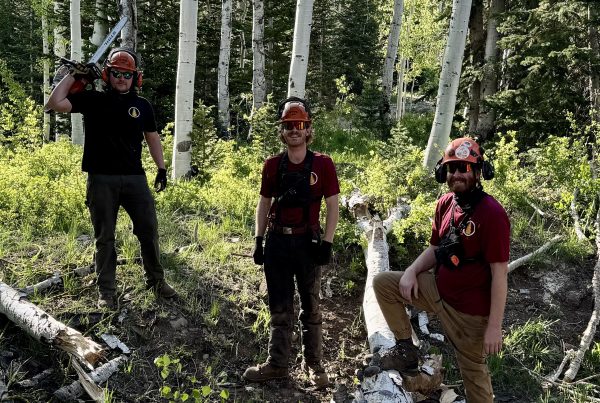
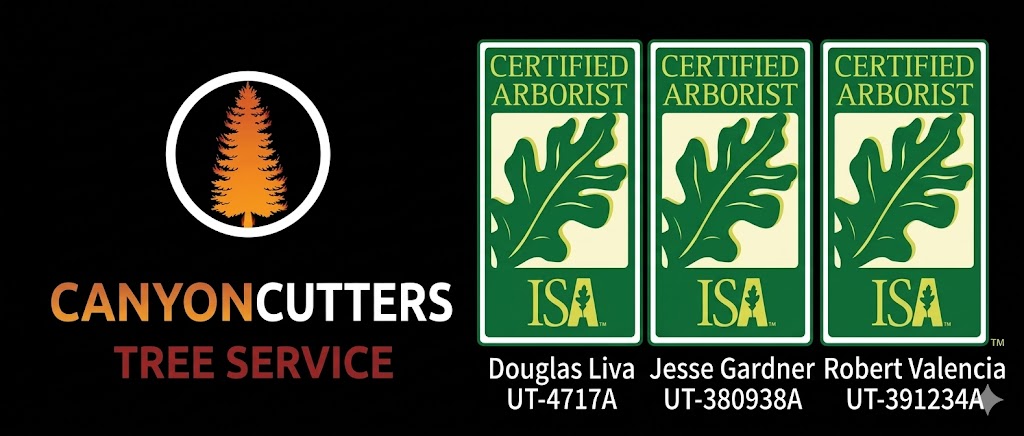
Canyon Cutters’ team page also identifies owner Douglas Liva as an ISA Certified Arborist, which gives homeowners added confidence that tree health, structure, and risk are being evaluated through an arboriculture lens rather than just as a cutting job.
The Main Goals of Good Tree Care
Health, safety, and structure
The first goal of tree care is tree health. That means giving a tree enough water, soil oxygen, root space, light, and structural guidance to keep it vigorous and stable. According to ISA guidance on mature tree care, pruning, mulching, watering, and inspection are basic maintenance practices that directly affect a tree’s long-term condition. The goal is not to cut a tree often. The goal is to do the right work at the right time for a clear reason.
The second goal is safety. Trees can fail because of deadwood, cracks, decay, included bark, root damage, snow load, wind exposure, or unresolved storm damage. A safe tree care program identifies those issues early, before they become emergency jobs. On a mountain property, safety also includes sight lines, vehicle clearance, roof clearance, access around stairs and decks, and space for plows, contractors, and emergency responders.
The third goal is structure. Tree structure is what allows a tree to live long without developing predictable problems. Good structural pruning when a tree is younger can reduce future co-dominant stems, heavy end weight, poorly attached limbs, and unbalanced crowns. For mature trees, structure work is more selective. It focuses on risk reduction, weight management, and keeping the canopy stable without overcutting it.
Value, access, and resilience
Tree care also protects value. Buyers notice clean tree lines, healthy crowns, managed understory, usable outdoor areas, and properties that feel maintained rather than overgrown. On high-value homes near resort corridors, neglected trees can work against curb appeal, create hidden hazards, and increase deferred maintenance. Well-maintained trees do the opposite. They make the property feel established, cared for, and safer to occupy year-round.
Access is another major goal. Canyon Cutters specifically lists services such as tree removal, pruning, storm cleanup, snow removal, dump truck hauling, and clearing trails for ski in and ski out access on its homepage. That service mix reflects a local truth. Tree care in Park City often affects whether people can safely use a driveway, deck, pathway, ski route, or service corridor. A branch over a roof may be a risk issue. A limb crowding a narrow driveway may be an access issue. A brushy edge near a ski trail may be both.
Finally, good tree care builds resilience. In a dry Western climate, stressed trees are more vulnerable to insects, disease, storm breakage, and fire. Healthy trees with proper spacing, better root conditions, less competition, and less dead material are more likely to hold up over time. That resilience matters not only for aesthetics, but for the whole property system around the trees.
A Year-Round Tree Care Schedule
Spring tree care
Spring is inspection season. Snowmelt exposes what winter did to the property. Look for broken limbs, bark damage, split branch unions, uprooting signs, and debris piles that collected near fences, sheds, or drainage paths. Spring is also a good time to notice where water pools, where erosion starts, and where saturated soil may be affecting root zones.
For many properties, spring is when a broader cleanup should be scheduled. Canyon Cutters describes land management as a service where the crew can return annually in spring to comb through the property and remove unwanted and hazardous debris brought on by winter. That kind of reset is especially useful on wooded lots, second homes, and parcels that back to forest or open hillside.
Spring is also a key time to check for irrigation problems before summer stress arrives. Dry mountain air, reflected heat from hard surfaces, and changing soil moisture can all put trees under pressure quickly once temperatures rise.
Summer tree care
Summer is when water management becomes critical. Utah State University Extension notes that landscape trees in Utah need regular irrigation in the dry summer months, and that soil type changes how often watering is needed. In practical terms, this means homeowners should think about deep, root-zone watering rather than quick surface watering.
Summer is also when stress symptoms begin to show. Needles may fade. Leaves may scorch. Canopies may thin. Branch tips may die back. Conifers under drought pressure can become more vulnerable to bark beetles and related decline, which is one reason summer inspections should include close attention to crown color, pitch flow, unusual boring dust, and sudden canopy changes.
For properties in higher fire-risk settings, summer is also the season to stay ahead of fuel buildup. Dead limbs, slash, ladder fuels, and dry brush should not be allowed to accumulate next to the house or along access corridors. Summer is the wrong time to wait for a perfect moment. Prevention work is often most useful before conditions get severe.
Fall tree care
Fall is a preparation season. It is the time to remove dead material, correct obvious structural problems, chip brush, clean around structures, and reduce the amount of weight or weak wood likely to fail under snow. It is also a good time to review whether trees are crowding roofs, gutters, chimneys, decks, walkways, or drainage channels.
For homeowners thinking about fire readiness, fall is one of the best times to complete fuel reduction work because it puts the property in better condition heading into the next dry season. Canyon Cutters’ wildfire-related articles and service pages repeatedly emphasize the role of pruning, wood chipping, cleanup, and land management in preparing homes near Park City and Heber City for wildfire conditions. A property that goes into winter cleaner is also easier to maintain in spring.
Fall is also when many owners of second homes or vacation homes should do one more site review before snow accumulates. Small overlooked issues, such as low limbs over a drive or unremoved debris in a drainage swale, often become expensive problems by the time snowmelt arrives.
Winter tree care
Winter is not dormant from a property management standpoint. Trees may be biologically quieter, but snow and ice create their own workload. Branches can bend or snap over roofs, decks, power access, and roads. Snow piles can block visibility at drives or conceal stumps and debris. Heavy accumulations can worsen existing structure defects that were easy to miss in summer.
Winter is also when access matters most. Canyon Cutters lists snow removal and ski trail clearing among its services, which fits the practical needs of mountain homes where tree lines, snow storage, and access routes all affect safety. Tree care and winter access are often linked on these properties. A crowded canopy can hold snow where you do not want it. A leaning tree can threaten a route you need to keep open. A stump hidden under snow can turn into a hazard for plowing or foot traffic.
For some species and some objectives, dormant-season pruning may also be useful, but timing and scope should always be decided with the tree’s health and site conditions in mind.
Tree Inspections and Early Warning Signs
Structural warning signs
Most major tree problems do not begin as emergencies. They begin as signs. The earlier you see those signs, the more choices you have. Start at the ground and work upward. Look for heaving soil, exposed roots, recent grade changes, standing water, trenching, mower damage, impact wounds, and buried root flare. Then look at the trunk for cracks, seams, cavities, loose bark, fungal growth, or areas where the trunk shape suddenly changes.
Move next to the canopy. Watch for dead branches, broken tops, uneven leaf-out, hanging limbs, rubbing branches, heavy lateral limbs, and stems that appear to be competing with each other. If a tree suddenly leans more than it used to, or if a branch now hangs lower over a target area, do not assume it is just settling. Have it evaluated.
Homeowners should also pay attention after nearby construction, drainage changes, or hardscape work. Roots are often damaged long before the canopy shows it. A tree can look acceptable the season after an impact and still be on a path toward decline or failure later.
Insect and disease warning signs
Utah property owners should not ignore drought stress, especially on conifers. USU Extension has warned that prolonged drought can accelerate Ips bark beetle problems in ornamental conifers. In practical terms, a stressed spruce or pine is not just thirsty. It may be more vulnerable to attack.
Signs worth watching include sudden yellowing or browning in the crown, pitch tubes, fine reddish or brown boring dust at bark crevices or at the base of the tree, dieback in upper sections, and unusual bark flaking. USU guidance on spruce health in Utah landscapes highlights fading foliage, frass, and pitch tubes as important clues. These symptoms do not always mean the tree can be saved, but they do mean the tree should not be ignored.
For deciduous trees, warning signs may show up as sparse leaf-out, unusual leaf size, cankers, oozing, branch dieback, or fungal growth. In every case, the key is not to self-diagnose too aggressively. The safer approach is to note what changed, when it changed, and what happened around the tree before it changed. That context helps an arborist decide whether the issue is drought, roots, insects, disease, or structural stress.
On larger properties, it is smart to think in patterns rather than single trees. If several similar trees begin showing stress at the same time, the cause may be irrigation, compaction, soil, exposure, or a site-wide issue rather than one isolated defect.
Pruning the Right Way
Why correct pruning matters
Pruning is one of the most important tree care services, but it is also one of the easiest to do poorly. Good pruning removes dead, broken, rubbing, obstructive, or poorly attached growth for a clear reason. It does not strip out the canopy simply because a homeowner wants “more air” or “a cleaner look.” USU Extension’s pruning overview explains that pruning for health includes removing broken, dead, crowded, or infested branches, while hazard pruning focuses on reducing risk to people and property.
That matters in Park City because pruning decisions often affect snow loading, roof clearance, driveway access, views, and wildfire fuels. A correct cut can reduce weight at the right point, keep a branch from overextending, or remove a future failure point. A bad cut can create weak regrowth, expose the tree to more stress, or leave the canopy unbalanced.
Pruning should also fit the tree’s age. Younger trees benefit from structural guidance. Mature trees need more restraint. The larger the limb and the more important the target beneath it, the more careful the decision-making should be.
Timing pruning in Utah
Pruning can happen at different times of year depending on the goal, but USU notes that winter or early spring before buds swell is often a preferred time because the tree is dormant and energy reserves are high. That does not mean every tree should only be pruned then. Hazard corrections, broken limbs, storm damage, and access issues may need immediate attention.
For homeowners, the practical takeaway is simple. Do not prune by habit alone. Prune with a purpose. If the objective is structure, hazard reduction, clearance, deadwood removal, or fuel reduction, the plan should match that objective and the species involved.
On properties where views matter, pruning should also be realistic. A tree should not be set up to fail just to chase a slightly wider view corridor. Good arborist work balances views, health, privacy, and long-term structure.
Pruning mistakes to avoid
One of the biggest mistakes is topping. The International Society of Arboriculture explains that topping is harmful because it creates weakly attached regrowth, larger wounds, and extra stress. Topping is not real risk management. It is often deferred damage.
Another mistake is leaving stubs or cutting flush to the trunk. Proper cuts matter because they affect the tree’s ability to close wounds effectively. USU’s pruning guidance also notes that wound dressings are generally not recommended. Trees should not be painted over or coated after routine pruning in the hope that a product will do the healing for them.
A third mistake is over-pruning after a storm. When homeowners see damage, there is often a temptation to cut hard and cut fast. Yet USU’s storm cleanup guidance specifically warns against over-pruning or topping storm-damaged trees because it increases stress and vulnerability. In many cases, careful corrective pruning is the better path.
For local homeowners, the easiest rule is this: if the tree is large, near a house, over a roof, or near a slope, the cost of bad pruning is usually far greater than the cost of doing it correctly the first time.
Watering, Mulching, and Soil Care
Watering for deep roots
Watering is one of the most misunderstood parts of tree care. Trees do not benefit much from frequent shallow watering that only wets the surface. They benefit from irrigation that reaches the root zone deeply enough and often enough to reduce drought stress without creating constant saturation. In Utah’s dry climate, this becomes even more important.
USU Extension explains that summer irrigation is essential for landscape trees in Utah, and that soil texture influences how often watering is needed. That is why a watering plan should fit the actual site. Sandy soil dries faster. Compacted soil may shed water or restrict oxygen. Sloped sites can lose water before it penetrates properly.
On mountain properties, watering issues often show up in shoulder seasons. Trees may suffer in spring and fall when homeowners assume cooler weather means no irrigation support is needed. Conifers can enter winter already stressed. Then the visible decline appears much later, after the cause has been forgotten.
A good rule is to water the root area, not the trunk. Keep irrigation away from direct trunk contact, and spread watering across the likely root zone rather than treating the base like a houseplant.
Mulching the right way
Mulch is one of the simplest ways to improve tree conditions when it is done correctly. ISA’s mulch guidance and USU’s planting guidance both point to the benefits of mulch for moisture retention, root protection, and moderation of soil temperature. USU specifically notes that a wood chip or coarse organic mulch bed can greatly increase root and tree health, and recommends a mulch depth of about 3 to 4 inches while keeping the mulch a couple of inches away from the trunk.
That last part matters. Volcano mulching, where mulch is piled against the trunk, traps moisture where you do not want it, encourages decay, and can attract pests. Good mulch forms a broad ring, not a cone.
Wood chips are often an excellent mulch choice, which is one reason onsite chipping can be such a useful service. Instead of treating trimmings as pure waste, they can often be turned into practical site material where appropriate. That is one of the reasons a local service like wood chipping can support both cleanup and long-term tree health.
Soil compaction, turf, and root stress
Trees live or decline from the root zone up. Compacted soils reduce oxygen, restrict root growth, and make water management harder. On mountain lots, compaction can come from repeated parking, foot traffic, snow storage, construction, and hardscape work. The tree may still look acceptable for a while, but the site quality around it has already changed.
Grass also competes more than many homeowners realize. ISA’s Trees and Turf guidance explains that roots of turf and trees compete for water and nutrients in the upper soil zone. That is one reason broad mulch beds often outperform turf right up to the trunk.
USU also advises against hard non-organic mulches such as lava rock or marble chips under trees because they do not cool the soil or add organic matter, and can contribute to compaction. Organic mulch is usually the better fit.
If a tree has been surrounded by lawn, hard edging, decorative rock, or frequent traffic for years, improving that root environment can be one of the most useful tree care actions you take.
Young Tree Care and Establishment
Young trees set the course for everything that comes later. A tree that is planted at the correct depth, watered properly, mulched correctly, protected from turf competition, and structurally trained early has a much better chance of becoming a strong mature tree. A tree that is planted too deep, watered poorly, or neglected in its first years often carries those problems into adulthood.
USU’s landscape tree planting guidance emphasizes that newly planted trees lose a large portion of their roots during transplanting, making water the greatest need at planting time and for one to two years afterward. That alone is enough reason not to “plant and forget” a new tree.
Young tree care should focus on establishment first and shaping second. Remove dead, damaged, diseased, or rubbing branches, but avoid aggressive pruning at planting. USU specifically notes that little pruning should be done at planting time because the tree is already stressed and needs stored energy for recovery.
On Park City properties, tree placement also deserves careful thought. A species that looks manageable at planting may crowd a roofline, block a view, interfere with snow movement, or create future clearance problems once mature. Good young tree care includes thinking years ahead, not just one season ahead.
If you are adding trees as part of a larger site improvement, it makes sense to coordinate planting with the broader property plan. That may include drainage, slope conditions, wildfire spacing, trail routes, and the future use of the outdoor area. Tree care starts before a tree even goes in the ground.
Mature Tree Care Near Homes and Ski Resort Lots
Mature trees deserve a different level of respect. They take years to develop their canopy, value, and visual presence, and once they are established near a home they become part of the identity of the property. The goal with mature trees is not constant intervention. It is selective, skilled maintenance that reduces risk while preserving as much value as possible.
ISA explains that pruning mature trees often requires special equipment, training, and experience. That is especially true when the tree is over a structure, above a slope, or close to a limited-access area. On Park City lots, it is common to have mature trees near retaining walls, multi-level decks, narrow drives, guest parking, or downhill fall zones where every cut and rigging decision matters.
Mature tree care is also where restraint matters most. Removing too much live canopy can stress the tree and reduce its ability to recover. Leaving clear defects untreated can expose the property to avoidable risk. A good arborist reads that balance and makes recommendations based on targets, condition, species, and site use.
In practical terms, mature tree care on mountain properties often means deadwood removal, weight reduction on overextended limbs, selective clearance from roofs or structures, removal of damaged or declining leaders, monitoring of root-zone disturbance, and related services like brush cleanup or emergency tree care after storms.
For homes near ski resorts, mature tree care can also be tied to winter operations. A tree that shades part of a driveway, leans into a plow corridor, or overhangs a roof edge may need attention before heavy winter weather turns it into a recurring hazard.
When Removal or Stump Grinding Makes Sense
Not every tree should be saved at all costs. Removal becomes the right answer when a tree is dead, structurally unsound, aggressively leaning toward a target, badly decayed, too compromised by roots or storm damage, or simply planted in the wrong place for the way the property functions. Removal is not failure. In many cases, it is the safest and most responsible decision.
On Canyon Cutters’ homepage, tree removal is described plainly: if a tree is risky or unsightly, the crew can remove it, stump and all. That matters because removal often solves only half the problem if the stump remains in a key location. Stumps can interfere with regrading, mowing, replanting, snow work, drainage corrections, and foot traffic. They can also hold onto the visual mess of a job that should feel finished.
That is where stump grinding becomes useful. Grinding can make the area safer, more usable, and easier to restore. It is especially practical where a full root excavation would cause unnecessary disturbance.
Tree removal on mountain properties is rarely just cutting wood. It often involves rigging, access planning, debris movement, property protection, and a decision about whether the material should be chipped onsite, hauled away, or both. That is one reason it helps to work with a team that also handles tree removal projects, wood chipping, and land management rather than treating every step as a separate vendor problem.
For homeowners, the best question is not “Can this tree be cut down?” It is “What gives me the safest, cleanest, and most durable property outcome?” Sometimes that answer is pruning. Sometimes it is removal and grinding. Sometimes it is removal plus drainage correction, cleanup, and replanting.
Fire Mitigation and Defensible Space
Home Ignition Zone basics
In the Wasatch and Uinta mountain setting, tree care is closely tied to wildfire readiness. This is not just a public-land issue. It is a private property issue. The way trees, shrubs, dead material, roofs, decks, fences, and access routes relate to each other affects how vulnerable a home is to embers and flame.
NFPA explains that home ignition risk is shaped by the condition of the home and the area around it. Its wildfire preparation guidance organizes the property into zones around the home, and NFPA’s Firewise materials identify the Immediate Zone from 0 to 5 feet, the Intermediate Zone from 5 to 30 feet, and the Extended Zone from 30 to 100 feet. That framework is helpful because it gives homeowners a way to think about priorities.
Utah DNR’s wildfire preparedness resources make the same point in local terms. Property owners have a direct role in preparing homes and land for wildfire. For wooded homesites in Park City and Heber City, that means tree care is not separate from fire mitigation. It is one of the main tools that make fire mitigation possible.
Fuel reduction, spacing, and chipping
Fuel reduction does not mean clear-cutting the property. It means reducing the arrangement and amount of flammable material that helps a surface fire climb, spread, or throw heat and embers toward the home. That usually includes removing dead wood, reducing dense understory, separating fuels vertically and horizontally, keeping limbs away from roofs and decks, and maintaining cleaner access routes.
This is where Canyon Cutters’ service mix becomes especially relevant. Fire mitigation is listed as a core service on the homepage, and the company’s wildfire-related content repeatedly connects pruning, brush clearing, wood chipping, land management, and property rehabilitation with better wildfire readiness. On steep or wooded parcels, the most effective work is often not one giant cut. It is thoughtful thinning, cleanup, and maintenance repeated over time.
Wood chipping is particularly valuable here. Chipping slash reduces pile buildup, lowers hauling volume, and can help process debris efficiently after pruning or thinning. That is one reason wildland fire safety work and home hardening efforts often pair well with onsite chipping, hauling, and follow-up cleanup.
For homeowners, the most important mindset shift is this: fire mitigation is not a one-time event. Trees grow. Brush returns. Deadwood accumulates. Needles and leaves gather in corners and under decks. A fire-ready property is maintained, not declared finished forever.
Storm Cleanup, Snow Damage, and Emergency Work
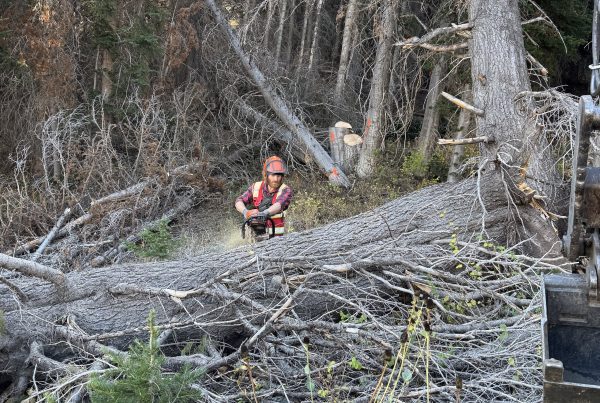
Storms reveal weak points fast. High winds, wet snow, ice buildup, and saturated soil can turn a minor tree defect into a major failure. When that happens, safety comes first. Stay away from hanging limbs, partially fallen trees, and branches under tension. Do not assume a cracked limb is stable just because it has stopped moving.
USU’s storm cleanup guidance notes that small damage can sometimes be handled carefully, but bent or tensioned branches can shift violently during cutting. That is exactly why large storm cleanup work should not be treated as a casual chainsaw task.
For Park City and Heber City homes, storm cleanup often means more than removing what fell. It may also mean inspecting what remains. A tree that lost one limb may now be unbalanced. A trunk that shifted may show root plate movement. A branch failure may expose included bark or a long hidden crack in the union above it. That is why the right response after a storm often includes both emergency cleanup and a second-phase assessment.
Canyon Cutters has multiple storm and emergency resources, including a storm damage guide, emergency tree care guidance, and related debris cleanup content. That matters because emergency work is not just about speed. It is about safe sequencing, property protection, and deciding what can be saved versus what should be removed.
On winter properties, snow damage should also be viewed through the lens of future access. Broken tops and hanging limbs may not reach the ground immediately. They can remain suspended above driveways, stairs, or ski paths until warmer weather or vibration brings them down later. A proper cleanup closes that risk loop rather than just making the scene look better for the moment.
Wood Chipping, Hauling, and Land Management
Tree care creates material. Branches, logs, brush, needles, stems, stumps, and slash all have to go somewhere. On a steep residential lot, the cleanup plan is often just as important as the cutting plan. That is why wood chipping, dump truck hauling, and broader land management services matter so much in real-world arborist work.
Canyon Cutters lists wood chipping, dump truck hauling, and land management among its core services. For homeowners, that means cleanup can be handled as part of the job rather than as an afterthought. Chips can often stay onsite where useful. Larger material can be hauled. The finished site can be left safer and more usable than it was before the work began.
Land management is especially relevant on wooded or semi-wooded parcels where the goal is not just one tree, but the condition of the whole property. This may include seasonal cleanup, deadfall removal, opening sight lines, reducing overcrowding, maintaining usable outdoor space, improving access for future work, and preparing the property for fire season or winter.
Property owners sometimes underestimate how much perceived disorder comes from leftover material rather than the tree itself. A well-pruned tree next to scattered slash and brush piles still feels neglected. A clean site with chipped material handled well feels managed. That difference shows up in day-to-day usability and in property value.
On some sites, hauling is also what makes the rest of the project possible. If debris blocks access, crowds a slope, or keeps drainage from functioning, moving it efficiently becomes part of the solution rather than just the cleanup.
Drainage, Erosion, and Sloped Terrain
On mountain properties, tree care and drainage cannot always be separated. Roots, surface runoff, snowmelt, compacted areas, brush buildup, and disturbed soil all affect how water moves. When that water moves poorly, slopes weaken, erosion worsens, and trees can become less stable over time.
Canyon Cutters specifically lists erosion and drainage construction solutions as one of its services. That is important because a tree problem may actually be a site problem in disguise. A tree that appears to be declining may be sitting in chronically saturated soil. A repeatedly muddy edge may need grading or drainage work, not just more cleanup. A slope that loses material every runoff season may need both vegetation management and water control.
USU’s drainage guidance notes that poor drainage is a common planting and soil problem. For homeowners, the takeaway is simple. Do not assume every struggling tree needs fertilizer or pruning first. Water movement and root-zone conditions may be the real issue.
Sloped terrain also changes how work should be performed. Material needs to be stabilized. Footing matters. Equipment access matters. Cleanup routes matter. On these properties, a crew that understands both arborist work and mountain site logistics has a clear advantage over a general yard crew that treats every lot as though it were flat and open.
When tree care is paired with drainage and slope awareness, the results tend to last longer. The property is not just cut back. It is made more stable and more functional.
When to Hire a Professional Arborist
Some tree care tasks are reasonable for homeowners. Picking up small fallen branches, watching for obvious changes, refreshing mulch correctly, or checking irrigation coverage are all practical examples. But many situations cross the line into professional work quickly.
You should strongly consider a professional arborist when the tree is large, near a home, over a roof, above a retaining wall, near a steep drop, close to a driveway, structurally compromised, storm damaged, dead, or suspected of having root or insect issues. You should also consider professional help when the work affects wildfire readiness, access for snow operations, or the overall safety of a slope or drainage area.
ISA’s tree owner resources are useful because they show homeowners what trained tree care is supposed to look like. That is a good reminder that “tree work” is not one single skill. Proper diagnosis, safe pruning, rigging, cleanup planning, and site protection all matter.
Locally, this is where it helps to connect with a company that can handle arborist judgment and full-property execution together. If the recommendation is pruning, the job should be pruned correctly. If the recommendation is removal plus chipping plus hauling plus stump grinding, the job should not have to be pieced together across multiple crews unless there is a strong reason to do that.
When the tree issue is urgent, the safest move is not to wait until the problem becomes obvious to everyone else. It is to schedule an assessment through the Canyon Cutters contact page while there are still options.
Why Canyon Cutters Fits This Work
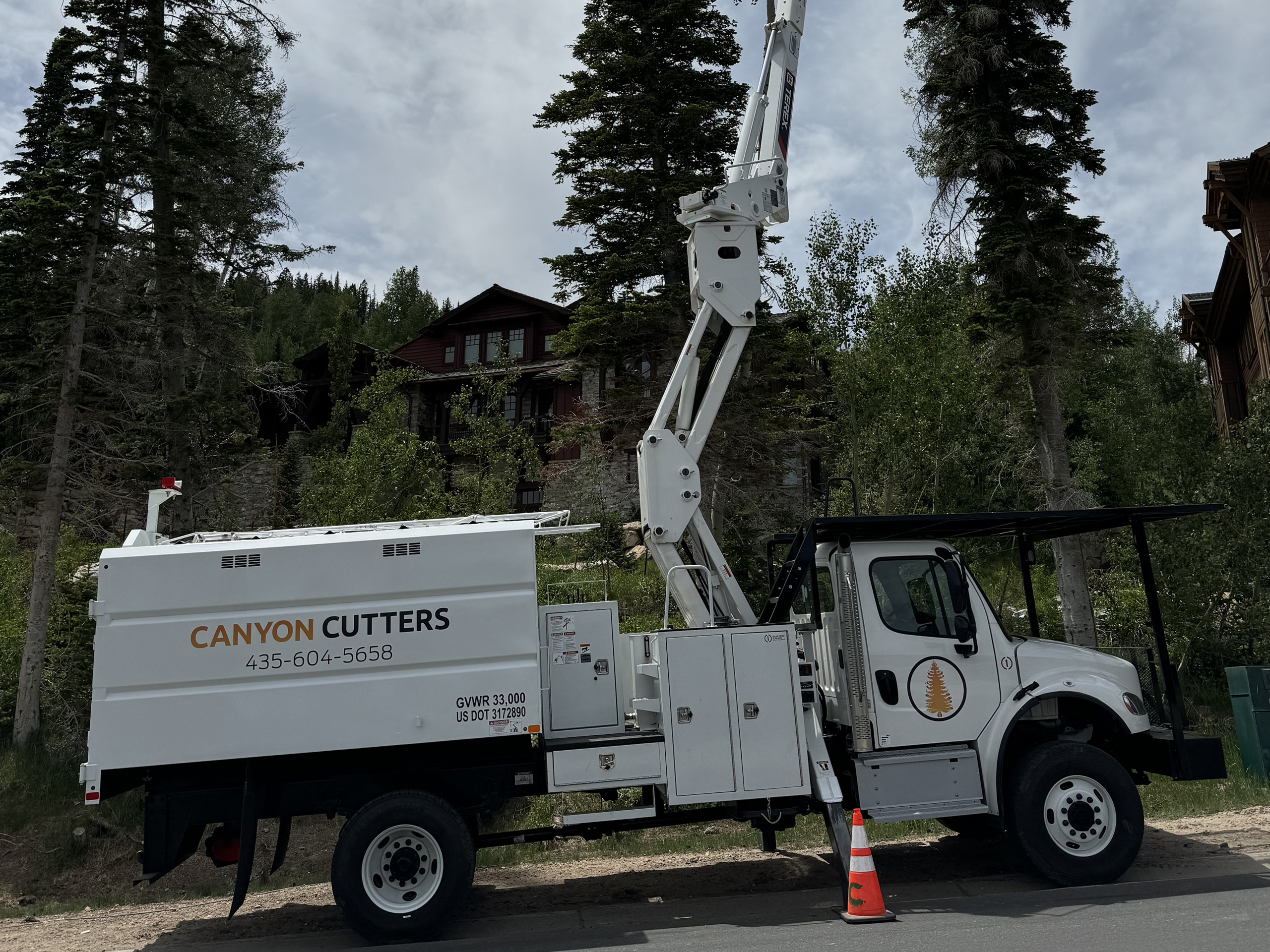
Canyon Cutters is a strong fit for this kind of tree care because its service profile matches how tree problems actually show up on mountain properties. The company is locally owned and operated in Park City, Utah. It states that it focuses on homes and property on and near the ski resorts of Park City, while also serving Heber City residents and specializing in forestry applications for fire mitigation work needed in the Wasatch and Uinta Mountains.
That local focus matters because many tree care problems in this market are not isolated. A homeowner may need pruning, but also have storm debris, a steep slope, limited equipment access, or a driveway that must stay open. Another homeowner may start with fire mitigation and then discover that wood chipping, hauling, and property rehabilitation are all part of the same solution. Canyon Cutters’ homepage reflects that full-service reality with core offerings that include wood chipping, land management, tree removal, dump truck hauling, fire mitigation, tree pruning, stump grinding, snow removal, trail clearing, erosion and drainage solutions, storm cleanup, and property rehabilitation.
The company’s team page also identifies owner Douglas Liva as an ISA Certified Arborist, which is a useful signal for homeowners who want professional tree care standards behind the work. Combined with the company’s local service footprint and multi-service approach, that makes Canyon Cutters especially relevant for complex residential sites rather than just simple yard cleanups.
If your goal is to keep a Park City or Heber City property safer, cleaner, easier to use, and more resilient through all seasons, the value is not just in getting a crew to cut something. The value is in getting the right work done in the right order, with the right follow-through. That is where a locally grounded arborist and land management company can make a real difference.
For property owners ready to take the next step, the simplest move is to start with a direct inquiry to Canyon Cutters and describe the full property issue, not just the first tree you noticed. The better the scope, the better the plan.
FAQs
How often should tree care be scheduled for a Park City property?
Most properties benefit from at least one thorough review each year, usually in spring or early summer, plus additional checkups after major wind, snow, or runoff events. Forested parcels, second homes, and lots near ski resorts often need more frequent attention because access, fuel buildup, and storm effects can change quickly.
What is included in tree care besides pruning?
Tree care often includes inspection, watering guidance, mulch correction, structural risk review, removals, stump grinding, brush cleanup, wood chipping, hauling, fire mitigation, storm cleanup, and sometimes related drainage or erosion work. On many mountain properties, the issue is site-wide rather than limited to one branch or one tree.
When is the best time to prune trees in Utah?
It depends on the species and the goal, but USU Extension says winter or early spring before bud swell is often a preferred time for many pruning objectives. Hazard limbs, broken branches, and storm damage may need attention sooner.
Can wood chips from pruning be reused on the property?
Often yes. When used correctly, wood chips can serve as useful organic mulch around trees and planting areas. ISA and USU both support mulch use when it is kept at the right depth and away from direct contact with the trunk.
How do I know if a tree should be removed instead of pruned?
Removal is usually considered when the tree is dead, badly decayed, structurally unsound, dangerously located, or too compromised to manage safely with pruning. A professional assessment is the best way to separate a correctable issue from a removal case.
Is tree care part of wildfire preparation?
Yes. Tree care is one of the most important parts of wildfire preparation for homes in wooded or mountain settings. Proper pruning, deadwood removal, understory cleanup, spacing, chipping, and fuel management all help reduce ignition risk and improve defensible space around the home.
Why is mulch better than grass right up against the trunk?
Broad mulch rings help reduce competition from turf, hold moisture, and improve root conditions. ISA notes that grass and trees compete for water and nutrients in the same upper soil zone, which is one reason turf right up to the trunk is usually not ideal.
What should I do after a storm breaks large limbs?
Stay clear of damaged limbs, especially anything hanging, split, or bent under tension. Avoid climbing or cutting if the damage is substantial. Document the issue, secure the area, and request professional storm cleanup and tree assessment as soon as possible.