Loading…
Loading

 Douglas LivaUT-4717AJohn HillUT-383707AJesse GardnerUT-380938ARobert ValenciaUT-391234A
Loading
Forest Health & Species Care
November 23, 2026
How to spot dwarf mistletoe brooms on lodgepole and Douglas-fir, how arborists rate an infection, and when pruning beats removal.
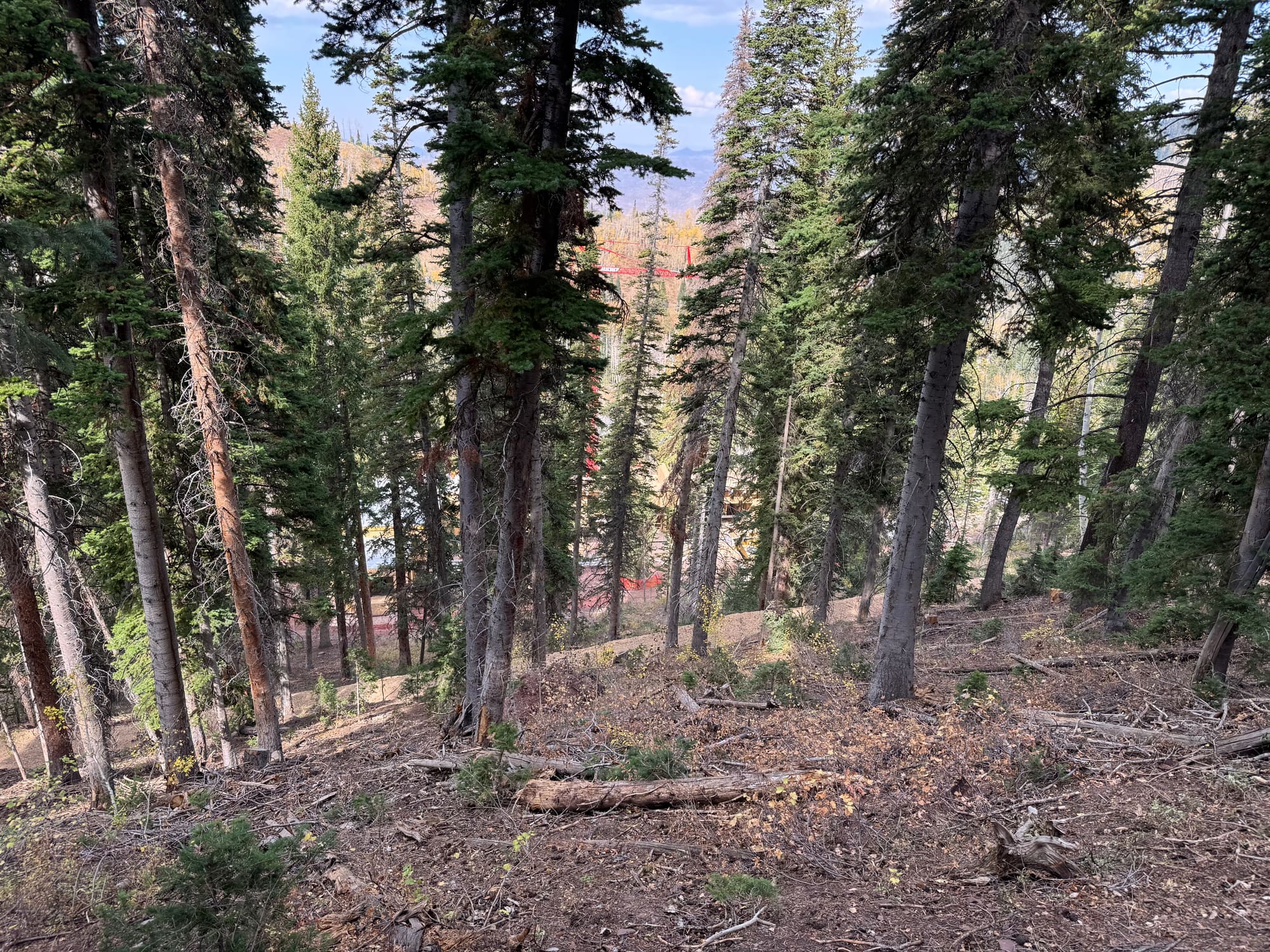
Dense, twiggy clusters on a lodgepole pine or Douglas-fir are usually witches’ brooms caused by dwarf mistletoe, a parasitic plant that mostly lives on one conifer species. A 2012 Forest Service report on Utah forest health called dwarf mistletoes “the most widespread and frequently observed disease within the state.” It spreads slowly, rarely kills a tree quickly, and on a home lot it can often be controlled by pruning if it is caught early.
Each dwarf mistletoe species generally attacks one host. The Forest Service’s management guide lists these in Utah:
| Mistletoe | Host | Range listed |
|---|---|---|
| Arceuthobium americanum | Lodgepole pine | Northern Utah |
| A. douglasii | Douglas-fir | Utah |
| A. cyanocarpum | Limber and bristlecone pine | Utah |
| A. divaricatum | Pinyon pine | Utah |
| A. vaginatum subsp. cryptopodum | Ponderosa pine | Southern Utah |
| A. abietinum f.sp. concoloris | White fir | Southern Utah |
Hardwoods are not affected, so aspen, maple and oak are safe. For Park City and Kamas lots, lodgepole and Douglas-fir are the trees to check. Our species field guide helps tell them apart.
Brooms are easiest to see from November to March, when nearby aspens are bare.
Dwarf mistletoe shoots its seeds. Colorado State University says they leave the fruit at up to about 60 mph in late summer. The Forest Service guide puts average flight at about 20 feet, with 90% landing within 30 feet. Infected overstory trees rain seed onto the young trees below.
It is slow. Shoots appear 2 to 3 years after infection, and seeds 2 to 3 years after that. Within a stand it advances about 1 to 2 feet a year.
The standard is the Hawksworth 6-class dwarf mistletoe rating (DMR):
A rating of 3 or less is light; 4 to 5 is moderate; 6 is heavy. Idaho’s forestry agency notes significant growth loss starts above 3, and trees can die as ratings approach 6. A tree climbs about one class every 15 years.
| Rating | Typical action |
|---|---|
| 1–4 | Prune infected branches and the lowest and largest brooms; re-inspect every 2 to 3 years |
| 5–6 | Remove the tree, especially if it stands over young trees of the same species |
Cut shoots die with the branch, so pruned material needs no special disposal. Winter is a good time to do the work, with brooms visible and no bark beetles flying. Not sure whether a tree is worth saving? Our guide to how arborists assess tree risk walks through that call.
Most often dwarf mistletoe, especially on lodgepole pine and Douglas-fir. Other causes exist, so a close look at the shoots confirms it.
Slowly, in heavy infections. Light infections do little harm, and moderate ones slow growth and stress the tree rather than kill it quickly.
No. Hardwoods are not affected, and each species stays mostly on its own conifer host.
Ethephon removes shoots for a time but does not kill the parasite. Pruning and removal are the lasting fixes.
We look at each infected tree, prune what can be saved and remove what cannot. Contact us or call (201) 960-8275. See our tree pruning and tree removal services.
Tags
Free Consultation
Tell us about your land and we'll set up a free on-site visit and walk it with you.
ISA Certified Arborist · Licensed & insured · Free, no-obligation estimates