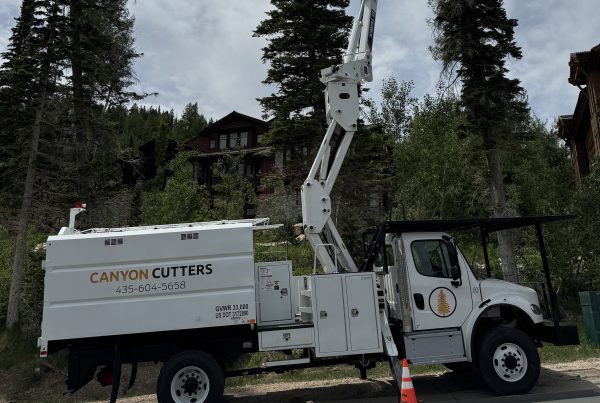
Cut a tree the right way starts with knowing what is at stake: your safety, your home, your views, and your local rules in Park City and Heber City, Utah. This guide explains when tree removal is the best option, why mountain properties near ski resorts have extra risks, and how Canyon Cutters helps homeowners and landowners handle everything from tree removal and pruning to wood chipping, stump grinding, storm cleanup, and fire mitigation in the Wasatch and Uinta Mountains.
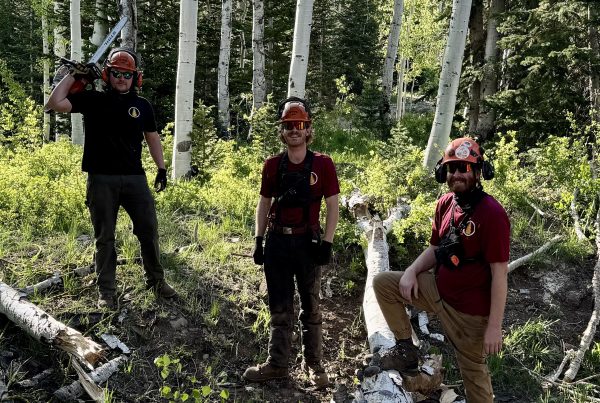
If you are deciding whether to remove a tree for safety, wildfire risk reduction, construction access, or property rehab, you will find practical checklists, permit considerations, cost factors, and what to expect from a professional crew. Canyon Cutters is locally owned and operated in Park City, Utah, with a primary focus on homes and property located on and near the ski resorts of Park City, and we offer a full arborist and forestry solution for Park City and Heber City residents.
Table of Contents
- What “cut a tree” really means on a mountain property and why it is often more than just “take it down”
- Why homeowners remove trees in Park City and Heber City, plus smart alternatives
- Local context in Park City, Heber City, and ski resort neighborhoods that changes the plan
- Rules, permits, HOAs, and right-of-way issues you should check first
- Safety first, common hazards, and why pros use trained systems
- How a professional evaluates the job before any cutting starts
- Tree species and health clues that influence removal decisions in Utah
- Ski-in and ski-out properties, steep terrain, and access planning
- Fire mitigation and forestry work in the Wasatch and Uinta Mountains
- Protecting your home, driveway, and landscape during removal
- What happens after the tree is down: chipping, hauling, stump grinding, and wood use
- Erosion and drainage after tree removal on slopes
- Storm cleanup and emergency tree work after snow and wind events
- Timing and seasons: when to schedule tree work in Park City
- Cost factors and how to get an accurate estimate
- How to choose an arborist for Park City and Heber City properties
- What to expect on removal day and how to prepare
- FAQs with quick answers you can use right away
- Next steps: talk to Canyon Cutters about your project
What “cut a tree” really means on a mountain property
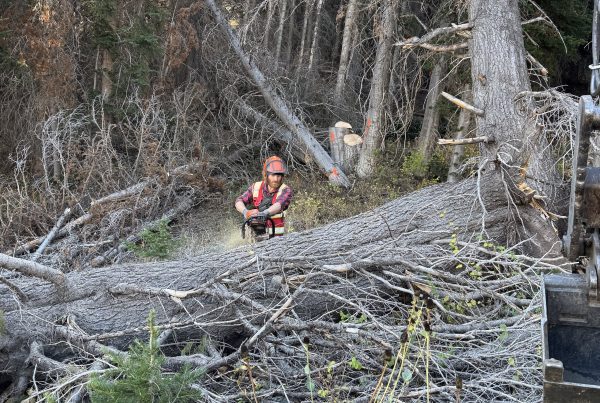
When people say “cut a tree,” they can mean very different things. Some homeowners mean removing a single dead tree that is leaning toward a roof. Others mean clearing multiple trees to create defensible space, open a view corridor, or reduce ladder fuels. On a Park City hillside, “cut a tree” can also include access work, hauling logistics, and slope protection after the tree is removed.
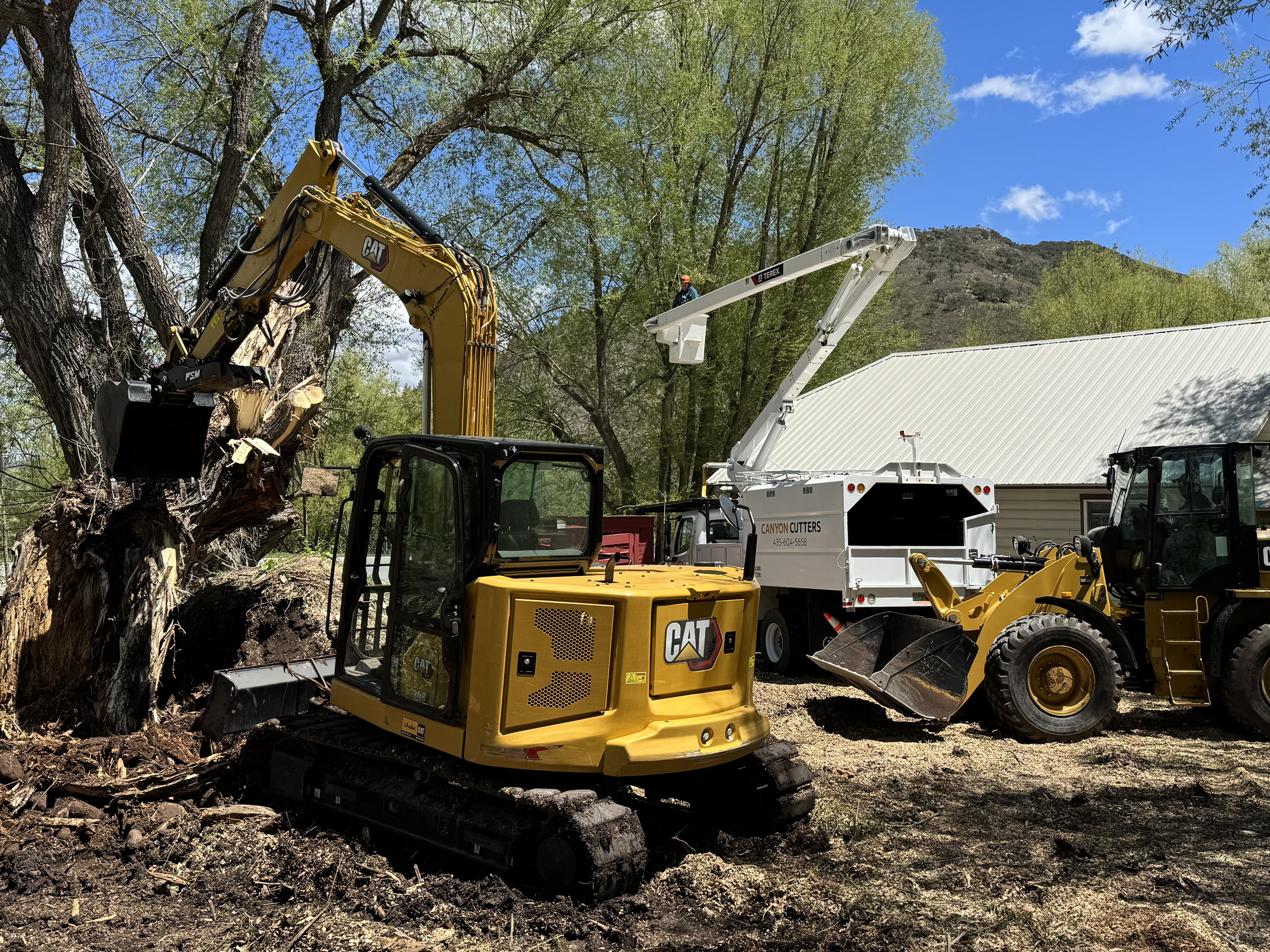
In professional tree work, removal is not just a saw task. It is a planned process that may include rigging, controlled lowering, sectioning, chipping, hauling, and stump grinding depending on what the site allows. That is why many homeowners start by reviewing the Canyon Cutters Services page to see how tree removal connects to wood chipping, dump truck hauling, storm cleanup, and property rehabilitation.
It also helps to separate three common job types:
- Tree removal: taking the tree down to the stump, often in sections, then cleaning up debris.
- Tree pruning: reducing risk and improving tree health without removing the entire tree, which Canyon Cutters covers in detail in our Park City and Heber City tree pruning guide.
- Forestry and land management: thinning, chipping, and fuel reduction across a larger area, which often starts with a plan similar to what we outline in our land clearing guide for Park City and Heber City.
If you are unsure which category your situation falls into, a quick site visit is usually the fastest way to avoid surprises. For homeowners who want to see real outcomes, the Canyon Cutters Before After page and Gallery can help you visualize what “done” looks like.
Why homeowners remove trees in Park City and Heber City, plus smart alternatives
Most tree removals have one primary driver: safety. But the best plan also respects long-term property goals, local rules, and the reality of mountain weather. Here are the most common reasons homeowners decide to remove a tree in Park City and Heber City.
Hazard reduction near homes, decks, and driveways
Dead tops, trunk cracks, root heaving, and heavy lean can shift from “watch it” to “remove it” quickly in a high wind or heavy snow cycle. The U.S. Forest Service warns that hazard trees can fail without warning, especially after storms or when trees have ice or insect damage, which is explained on the US Forest Service hazard tree resource.
Storm damage and “half-failed” trees
A partially uprooted spruce, a split trunk, or a hung-up limb can be more dangerous after a storm than a clean break on the ground. If you are dealing with debris and access problems, Canyon Cutters has a dedicated resource on storm recovery at storm cleanup and recovery services in Park City, plus broader event cleanup planning in this disaster cleanup guide for Park City and Heber City.
Wildfire risk reduction and defensible space
Many mountain neighborhoods sit in or near the wildland-urban interface, where reducing dense fuels can lower the risk of ember-driven ignition. Utah’s Division of Forestry, Fire and State Lands provides statewide homeowner planning resources on its wildfire community preparedness page, and NFPA’s Firewise program explains community-focused steps at Firewise USA. On the Canyon Cutters side, many homeowners start with wildland fire preparedness for Utah mountain communities and pair it with home hardening for Park City and Heber City homes.
Construction, access, drainage, and property rehabilitation
Sometimes a tree has to go because a driveway needs a safer turn radius, a drainage swale needs a clean path, or a rehab project requires equipment access. Canyon Cutters often bundles removal with land management and hauling so the property is left cleaner, safer, and more functional. If your project is bigger than a single tree, it can help to scan the solutions described in this clearing cost guide for Park City and Heber City properties and the planning concepts in this tree work pricing guide.
Smart alternatives that may avoid removal
Not every risky-looking tree needs to be removed. In many cases, targeted pruning, cabling, or reduction of competing fuels can solve the core issue. Utah State University Extension explains why pruning choices matter in this pruning overview, and Canyon Cutters expands on local mountain conditions in our tree pruning guide for ski-area homes.
Local context in Park City, Heber City, and ski resort neighborhoods that changes the plan
Tree removal in Park City and Heber City is not the same as tree removal on flat suburban lots. Canyon Cutters focuses on homes and property located on and near the ski resorts of Park City, where steep grades, tight access, snow storage zones, and sensitive landscaping can turn a basic job into a technical one.
Steep slopes and limited drop zones
On many resort-adjacent properties, there is no safe open area to drop a full tree. That often means a controlled removal in smaller sections with a carefully managed work zone. The plan also needs to account for what is below the tree: roofs, decks, hot tubs, fence lines, retaining walls, and drainage paths.
High snow load, freeze-thaw cycles, and wind corridors
Snow load can break limbs, hide cracks, and create delayed failures when temperatures swing. Wind funnels through canyons and around ridgelines, which can change how trees behave. If you are seeing repeated breakage or scattered limb fall, it is worth reviewing how Canyon Cutters approaches risk and storm response in this storm cleanup resource and this storm debris cleanup guide.
Second homes and property manager needs
Many properties near ski resorts are seasonal residences. That changes priorities. Owners often want proactive work that prevents mid-winter emergencies and protects access for snow removal. If your property has commercial or shared access points, it can also help to coordinate tree work around winter operations referenced in Canyon Cutters’ snow planning content such as this snow removal guide.
Forestry objectives beyond the homesite
In the Wasatch and Uinta Mountains, tree work may extend into wooded acreage where the goals are fuel breaks, access lanes, and long-term forest health. Canyon Cutters specializes in forestry applications for fire mitigation work needed in these mountain ranges, and homeowners often pair thinning and chipping with access improvements and erosion control described in our land clearing guide.
Rules, permits, HOAs, and right-of-way issues you should check first
Before you cut a tree, confirm where it is located and who has authority over it. Many disputes and delays come from misunderstandings about property lines and right-of-way. This matters even more in Park City where landscaping, sidewalks, and street corridors can be tightly regulated.
City property and right-of-way trees
If a tree is on City property or within a City right-of-way, the rules can be very different than a tree on your private lot. Park City’s municipal code includes sections on public tree care, illegal cutting on City property, and permits to remove trees or vegetation from City property, which you can review in the official Park City Municipal Code PDF for trees and landscaping. If you are unsure whether your tree is in the right-of-way, it is usually best to confirm boundaries before scheduling removal.
HOAs and resort neighborhood standards
Many ski-area communities have HOA standards for view pruning, removal approvals, replanting requirements, and seasonal work restrictions. Even if a tree is on your lot, your HOA may require an architectural review or documented arborist recommendation. Canyon Cutters works frequently in HOA environments and can align the job scope to your community process while keeping safety and cleanup as the priority.
Utility clearance and line safety
If a tree is near overhead power lines, you should treat it as a high-risk situation. NIOSH reports that electrocutions are a leading cause of death among tree trimmers, which is summarized in this CDC and NIOSH alert on falls and electrocutions. In practical terms, that means homeowners should avoid DIY cutting near energized lines and coordinate with qualified professionals and utilities when needed.
Stump grinding and underground utilities
Even after a tree is down, the job can still involve risk. Stump grinding and root work can contact buried lines. In Utah, the safest practice is to contact Blue Stakes of Utah before excavation, which is explained at Blue Stakes of Utah 811. Canyon Cutters often integrates this step into planning when stump grinding is included.
Safety first, common hazards, and why pros use trained systems
Cutting trees can cause severe injuries and property damage when it is done without training, protective equipment, and a clear plan. This is especially true in steep terrain, confined drop zones, and snow-affected ground. The goal of this section is not to train DIY felling. It is to help homeowners recognize risk and make safer decisions.
Why chainsaws are only one part of the risk
Chainsaws are dangerous on their own, but many serious incidents involve falls, struck-by impacts, and electrical hazards. OSHA’s safety overview in Working Safely with Chainsaws and its Chainsaw Safety quick card are good references for basic protective practices and why working alone is a bad idea.
Common homeowner pitfalls Canyon Cutters sees
- Underestimating weight: green wood is heavy, and snow-loaded limbs can be heavier than they look.
- Ignoring lean and tension: a tree may hold stored energy from wind, slope, or partial failure.
- Using ladders with saws: falls and kickback risks rise fast when footing is unstable.
- Cutting near structures without protection: one small mistake can damage roofing, windows, decks, or fences.
- Trying to “top” a tree: topping is widely recognized as harmful and can create weak regrowth and future failures, which is explained in this state forestry reference Why Topping Hurts Trees.
When you should treat removal as urgent
Some situations should move to the top of your list: a tree that has partially uprooted, a trunk split, a large limb hanging over a roof or driveway, or a dead tree in a wind corridor. If you need rapid response planning, Canyon Cutters has resources that help homeowners think clearly about urgent cleanup in this Park City and Heber City disaster cleanup guide and localized recovery in this Park City storm cleanup resource.
Why “do it right” is not just about technique
Professional crews reduce risk through setup: defining an exclusion zone, using communication protocols, managing drop paths, and coordinating equipment. Homeowners can support safety by keeping kids and pets away, clearing vehicles from the work area, and notifying neighbors if the work zone is close to shared lines.
How a professional evaluates the job before any cutting starts
A professional tree removal starts with assessment, not cutting. Canyon Cutters approaches the site with two questions: what is the goal, and what is the safest method to achieve it while protecting the property and leaving the site clean.
Step 1: Confirm the goal and the scope
Is the tree removal for safety, wildfire risk reduction, construction, view improvement, or cleanup after damage? The goal determines whether the job includes stump grinding, chipping, hauling, or follow-on land management. Homeowners who want to see how these services connect can review the Canyon Cutters Services page for a full list including wood chipping, land management, dump truck hauling, storm cleanup, and property rehabilitation.
Step 2: Read the site
This includes slope angle, soil conditions, snow and ice presence, access for equipment, and protection needs. On tight sites, a crew may need to stage debris in a safe area, chip on-site, or haul out in multiple loads. For projects with more debris volume, Canyon Cutters often incorporates solutions described in this wood chipping guide and planning insights in this Park City wood chipping resource.
Step 3: Identify hazards and targets
Targets include roofs, windows, fences, hot tubs, landscaping, and neighboring structures. Hazards include internal decay, dead tops, weak unions, and unstable roots. Homeowners can learn what red flags look like from the US Forest Service guidance in Hazard Trees, then use that knowledge to communicate concerns during an estimate.
Step 4: Plan cleanup and restoration
Removal is not complete until the site is safe and usable. That may include chipping, hauling, stump grinding, and slope cleanup. If stump work is expected, homeowners often find it helpful to read Canyon Cutters’ stump information in this stump grinding guide and cost details in this Park City and Heber City stump cost guide.
Tree species and health clues that influence removal decisions in Utah
In Park City and Heber City, the tree species and its condition can change the entire plan. Some species hold heavy snow differently. Others are more likely to show hidden decay. Many mountain properties also have a mix of ornamental trees near homes and denser conifers beyond the landscaped zone.
Aspen, spruce, pine, and mixed stands
Aspen can be beautiful but can also be short-lived in stressful landscape conditions, and removal sometimes becomes part of a long-term stand management strategy. Utah State University Extension discusses common aspen challenges in this aspen resource, which can help homeowners understand when decline is likely to continue.
Spruce and pine often dominate higher-elevation properties. These trees can create dense ladder fuels when lower limbs are retained and understory brush is unmanaged. That is why many owners pair tree pruning with fuel reduction, using a plan similar to what Canyon Cutters describes in wildland fire preparedness and home hardening planning.
Dead trees, beetle impact, and hidden structural problems
Dead standing trees can behave unpredictably when cut, and they often require a more cautious approach than live removals. If you are dealing with dead trees close to structures, Canyon Cutters’ cost planning resource at dead tree removal cost in Park City and Heber City explains what tends to change pricing and planning on hazard jobs.
Ornamental and fruit trees near homes
In Heber City and the Heber Valley, homeowners may have fruit trees and ornamentals where pruning is often the better first step. Utah State University Extension provides practical pruning timing notes in this pruning overview, and Canyon Cutters expands on local pruning choices in our ski-area pruning guide.
When removal supports healthier growth nearby
In dense stands, removing one or more competing trees can improve light, airflow, and long-term stability for the remaining trees. This is common on lots that back into forested areas, where homeowners want to preserve the feel of the land while reducing risk. Canyon Cutters often combines selective removal with chipping described in this wood chipping benefits article so slash does not become a fuel problem.
Ski-in and ski-out properties, steep terrain, and access planning
Homes on or near Park City ski resorts often have unique constraints. There may be limited equipment access, narrow driveways, shared easements, and tight staging areas. At the same time, these homes are often surrounded by mature trees that owners want to preserve where possible.
Access routes and protection zones
A skilled crew plans where equipment will travel and where debris will be staged, chipped, or loaded. Canyon Cutters frequently pairs tree removal with dump truck hauling and cleanup so the work does not leave a messy site. If you are dealing with a larger debris volume, it helps to review the service flow outlined in Canyon Cutters services and see how debris volume is handled in the wood chipping guide.
Clearing trails for ski access and safety
In some cases, tree work is tied to safe ski access. Clearing trails for ski-in and ski-out can also support emergency access and reduce snag hazards. When trail corridors are in forested terrain, Canyon Cutters may combine pruning, selective removal, chipping, and erosion control based on the goals described in the land clearing guide.
Working around snow operations
Even if the tree removal happens in warmer months, the plan should consider where snow stacks in winter and how plows access the driveway. If you manage a property with winter operations, you may find value in Canyon Cutters’ winter planning material such as this snow removal guide.
Minimizing visual impact while improving safety
Many owners want to protect views and preserve the alpine feel. In these cases, the best plan often starts with pruning and targeted removal rather than aggressive clearing. Canyon Cutters’ tree pruning guide explains how view improvement and safety pruning can work together, especially when snow load and wind are part of the risk profile.
Fire mitigation and forestry work in the Wasatch and Uinta Mountains
For many Park City and Heber City homeowners, the question is not just “should I cut a tree?” It is “how do I reduce wildfire risk without stripping the property?” The answer is usually a phased approach that combines defensible space principles, home hardening, and fuel reduction that fits your terrain.
Start with the home ignition zone and defensible space
Utah homeowners can find planning tools and education through Utah wildfire community preparedness, and community-level participation is explained through NFPA Firewise USA. The practical idea is to reduce easy ignition pathways near the home and manage fuels outward in a way that reduces flame length and ember traps.
Canyon Cutters turns those principles into real work: thinning and chipping, pruning to reduce ladder fuels, selective removal of dead and stressed trees, and haul-out so slash does not become future fuel. A good starting point for property owners is Canyon Cutters’ wildland fire preparedness guide paired with our home hardening guide.
Fuel reduction that still respects tree health
Fire mitigation is not the same as clear-cutting. Effective mitigation often preserves healthy, well-spaced trees while removing ladder fuels, brush density, and dead material. That is one reason wood chipping is so important in mountain communities, and Canyon Cutters breaks down practical outcomes in this Park City wood chipping resource.
Forestry applications for larger parcels
Cabins and larger parcels near wooded slopes may need a forestry-style plan that includes access lanes, shaded fuel breaks, and ongoing maintenance. If you have acreage work planned, Canyon Cutters’ land clearing guide and clearing cost guide can help you understand how scope and terrain influence the approach.
Legal and permit notes for fuel work
Homeowners sometimes ask if they can cut trees on nearby public land for fuel reduction or firewood. Rules vary by agency. The Bureau of Land Management explains forest product permits and personal use limits at BLM forest and wood product permits. If your property borders public land, always confirm boundaries and permission before cutting.
Protecting your home, driveway, and landscape during removal
Homeowners often worry less about the tree coming down and more about what gets damaged in the process. A quality plan prioritizes property protection and site cleanliness, especially on high-end homes near ski resorts where finishes and landscaping are valuable.
Work zone control
A controlled work zone keeps people away from drop paths and prevents damage from swinging sections. Homeowners can help by moving vehicles, clearing patio furniture, and confirming access gates are unlocked. If the job is near a shared driveway or neighbor boundary, a quick heads-up reduces stress for everyone.
Surface protection and access planning
On soft spring ground or irrigated lawns, equipment can leave ruts. On steep ground, traction and stability matter. Canyon Cutters plans equipment routes and staging to reduce impact, and when projects include hauling, the crew may combine services like dump truck hauling and debris removal listed on the Services page.
Debris management: chip, haul, or both
One of the fastest ways to keep a site clean is to chip branches immediately and remove larger wood. Canyon Cutters explains practical chip uses and removal strategies in this wood chipping benefits article and expands on equipment and service choices in this wood chipping guide.
Protecting structures from falling debris
On tight sites, controlled lowering protects roofs, windows, decks, and landscaping. If your tree is near a roofline or power lines, it is worth taking the conservative option and using a professional crew. For homeowners who want a safety baseline for saw work and protective gear, OSHA’s quick reference in Chainsaw Safety helps explain why PPE and process matter even on small cuts.
What happens after the tree is down: chipping, hauling, stump grinding, and wood use
Tree removal is not finished when the trunk hits the ground. In many cases, cleanup and site restoration are what homeowners remember most. Canyon Cutters is set up to handle the full process so you are not left with piles of slash or a stump that becomes a long-term nuisance.
Wood chipping and slash reduction
Chipping reduces volume fast and can support fire mitigation by removing fine fuels and messy piles. Homeowners sometimes keep chips for specific landscape uses, while others prefer full haul-out for a cleaner look. Canyon Cutters explains what chips are good for and when removal makes more sense in this Park City wood chipping resource.
Hauling and dump truck logistics
Large wood and heavy debris usually require hauling capacity, especially when access is limited and multiple loads are needed. Canyon Cutters offers dump truck hauling as part of its service mix, which is listed directly on the Services page.
Stump grinding: safety, space, and long-term usability
Stumps can be trip hazards, mower obstacles, and visual distractions. They can also resprout depending on the species. If your plan includes reclaiming yard space or replanting, stump grinding often makes sense. Start with Canyon Cutters’ stump overview in this stump grinding guide, then use this stump cost guide for Park City and Heber City to understand the factors that influence pricing.
Before stump grinding or digging, confirm underground utility marking. Utah’s official process is explained at Blue Stakes of Utah 811.
What to do with the wood
Some homeowners keep firewood, others want full removal, and some want wood staged for later splitting. If you plan to store firewood, keep it away from structures and avoid stacking against siding to reduce pest and moisture issues. If you want to cut wood from public land, review agency rules like the BLM guidance at forest product permits.
Site finish and “leave it better” details
On ski-area properties, cleanup quality is part of the service. Canyon Cutters often leaves sites with clean raked surfaces, hauled debris, and a plan for any follow-on work like brush clearing, drainage improvements, or property rehabilitation. If you are planning a bigger property reset, review the approach described in the land clearing guide.
Erosion and drainage after tree removal on slopes
Removing a tree can change how water moves across a property, especially on steep terrain. Roots help stabilize soil, and canopy cover slows rainfall. After removal, it is smart to check drainage paths, especially if the tree was above a retaining wall, driveway, or a known runoff channel.
Watch for soil movement and exposed roots
If you notice cracking soil, slumping, or new rills after storms, address it early. Small issues are easier to fix than full washouts. In Park City and Heber City, rapid snowmelt can reveal drainage problems quickly.
Chips, mulch, and fire considerations
Wood chips can help reduce erosion in some settings, but placement matters in wildfire-prone areas. If your goal is fire mitigation, you may prefer mineral surfaces near structures and use chips only where they do not increase risk. Canyon Cutters often ties debris management decisions into the wildfire planning concepts in home hardening planning.
Drainage solutions that match the terrain
In some cases, tree removal is followed by drainage and erosion construction solutions to protect access lanes and prevent seasonal damage. Canyon Cutters includes erosion and drainage construction solutions in its service list on the Services page, and these projects often pair well with land management described in this clearing cost guide.
When to combine removal with property rehabilitation
Some properties have multiple issues at once: dead trees, brush buildup, rutted access, and drainage failures. In these cases, a property rehabilitation approach can restore function while improving safety. If you are planning a full refresh, start with Canyon Cutters’ planning content at land clearing for Park City and Heber City and then discuss a phased plan through the Canyon Cutters contact page.
Storm cleanup and emergency tree work after snow and wind events
Storms create a different kind of tree risk. A storm-damaged tree may be under tension, partially supported by neighboring trees, or unstable at the root plate. The safest assumption is that damaged trees can move unexpectedly.
What to do first after a storm
- Keep people away from hanging limbs and partially failed trees.
- Assume downed lines may be energized and avoid the area if any wires are involved.
- Take photos from a safe distance for documentation if you need them for insurance.
- Focus on access and immediate hazards first, then cleanup and restoration.
If you want a structured approach for cleanup priorities, Canyon Cutters covers recovery planning in this storm debris cleanup guide and local response support in this Park City storm cleanup resource.
Why emergency jobs can cost more
Emergency work often involves higher risk, more equipment, and faster scheduling. The crew may need to work around blocked driveways, damaged structures, and limited staging areas. If you are trying to budget for a storm scenario, it helps to review Canyon Cutters’ cost-specific articles like fallen tree removal cost in Park City and broader planning in how much it costs to get a tree cut down in Park City.
Snow load failures and delayed breakage
Some failures happen days after a storm when temperatures rise and wind returns. The US Forest Service notes that damaged trees and cracked limbs can present hazards long after the weather clears, which is described on its hazard tree guidance page.
How Canyon Cutters supports storm recovery
Canyon Cutters offers storm cleanup, tree removal, debris removal, wood chipping, and hauling, which allows homeowners to move from hazard to clean property faster. You can see the full service list on the Services page and request help through the Contact page.
Timing and seasons: when to schedule tree work in Park City
In mountain communities, timing can affect safety, access, and cost. Some homeowners assume winter is always the worst time to cut a tree, but that is not always true. Snow can actually improve equipment access on some sites by protecting turf and allowing sled-style movement on compacted surfaces, while spring melt can turn driveways and slopes into soft ground.
Winter work: access, safety, and snow operations
Winter removals often require coordination with snow removal so driveways and staging areas remain clear. If your property has regular plowing or walkway service needs, it can help to align tree work with the patterns described in this snow removal guide.
Spring and mud season: protect surfaces
During thaw cycles, soil can be saturated and vulnerable. A good plan focuses on protecting surfaces and preventing rutting, especially on steep terrain and landscaped areas.
Summer and fall: wildfire planning and proactive maintenance
Many homeowners aim to complete fire mitigation and pruning before peak wildfire season. Canyon Cutters supports this with planning resources like wildland fire preparedness and actionable home-zone improvements in home hardening guidance.
Pruning timing versus removal timing
Pruning timing can differ by species and goals. Utah State University Extension notes that winter or early spring is often a preferred window for many pruning objectives, which is explained in this pruning overview. If your goal is to reduce risk without removing the tree, Canyon Cutters’ local guide at tree pruning for ski-area homes can help you choose a direction.
Cost factors and how to get an accurate estimate
Tree removal cost depends on more than tree height. In Park City and Heber City, terrain and access often matter as much as size. The best way to avoid sticker shock is to understand the main pricing drivers and request an on-site estimate that reflects your actual conditions.
The biggest cost drivers
- Tree size and weight: height, trunk diameter, canopy spread, and wood density.
- Access and staging: driveway slope, gate width, and equipment placement.
- Risk level: proximity to roofs, fences, power lines, and tight drop zones.
- Tree condition: dead trees can require more cautious handling.
- Cleanup scope: chip on-site, haul out, log length, and stump grinding.
- Terrain complexity: steep hillsides, retaining walls, and limited footing.
Use local cost resources to plan your budget
If you want a fast planning baseline, start with Canyon Cutters’ tree removal cost estimator for Park City, then compare it with local context explained in tree removal cost in Park City and Heber City. Homeowners also frequently read the size-specific article average cost to cut down a 30 foot tree in Park City to get a realistic range for medium-size trees.
Stump grinding and add-ons
Stump grinding is often priced separately because it requires different equipment and can be influenced by access, rock, and root spread. If you are weighing stump removal, Canyon Cutters’ stump removal cost guide for Park City and Heber City can help you budget accurately.
How to get a quote that matches reality
To get the most accurate estimate, share photos, confirm access details, and be clear about what you want done with debris and stumps. If your property is near a ski resort neighborhood with tight access or HOA requirements, include that information upfront so the plan can match your constraints. The fastest way to start is through the Canyon Cutters contact page, and you can reference your property goals using examples from the Before After page.
How to choose an arborist for Park City and Heber City properties
Choosing the right provider is about more than price. Tree work is risky, and your contractor should be able to explain how they reduce risk, protect your property, and leave the site clean. This matters even more on ski resort-adjacent properties where access is difficult and property finishes are expensive.
Look for clear scope, cleanup, and communication
A strong proposal should state what is being removed, what is being pruned, what happens to debris, whether stump grinding is included, and how the site will be left. It should also explain scheduling considerations and access requirements.
Ask how they handle power lines and high-risk zones
If the tree is near overhead lines, be direct about safety. The CDC and NIOSH resource at Preventing Falls and Electrocutions During Tree Trimming explains why electrical risk is a top fatal hazard in tree work. A professional should have a clear answer about how they approach that risk and when utilities are involved.
Confirm permit and right-of-way awareness
If your tree may be in a right-of-way or on City property, confirm how that will be handled. Park City’s rules and permit language can be reviewed in the official Park City Municipal Code PDF.
See their work and confirm they fit your property type
For high-end homes near ski resorts, it helps to see examples. Canyon Cutters maintains examples on the Gallery and Before After page, and our team background is available on the Team page.
Know what you are agreeing to
Before scheduling, it is smart to understand service terms and expectations. Canyon Cutters shares service agreement information on the Agreement page.
What to expect on removal day and how to prepare
A smooth removal day starts with preparation. Homeowners who plan a few details ahead of time often reduce delays and help the crew work more efficiently.
Homeowner checklist before the crew arrives
- Move vehicles away from the work zone and ensure access gates are unlocked.
- Keep pets inside and keep children away from the work area.
- Remove fragile outdoor items near the drop zone, such as planters or furniture.
- Confirm where you want chips, logs, or hauled debris to go.
- Clarify if stump grinding is included and where you want the final grade.
What the crew typically does first
Expect the crew to confirm the plan, define the exclusion zone, set up equipment, and begin controlled removal based on the safest available method. On tight lots, work often proceeds in sections to protect structures and landscaping.
Cleanup and finish details
Cleanup is where a professional job stands out. Many Canyon Cutters projects include chipping and haul-out so the site is left clean. If your project includes a lot of slash, you may want to review how chipping impacts volume and disposal planning in this wood chipping guide.
Post-job walk-through
A quick walk-through at the end helps confirm the scope is complete, the site is safe, and the cleanup matches your expectations. If follow-on work is needed, such as land management, drainage improvements, or additional pruning, this is the best time to plan next steps using resources like the land clearing guide or the tree pruning guide.
FAQs
How do I know if I should cut a tree or prune it instead?
If the tree is structurally compromised, dead, severely leaning toward a target, or repeatedly failing in storms, removal may be the safer choice. If the tree is healthy but overgrown, interfering with roof clearance, or needs ladder fuel reduction, pruning may solve the problem. A good starting point is Canyon Cutters’ tree pruning guide, then request a site evaluation through the Contact page.
Do I need a permit to cut a tree in Park City?
It depends on where the tree is located. Trees on City property or within City right-of-way corridors can require permission and a permit process. You can review official language in the Park City Municipal Code PDF, then confirm your tree location before scheduling work.
Is it safe to cut a tree near power lines?
Tree work near energized lines is high risk. Electrical contact is a leading fatal hazard in tree work, as summarized in the CDC and NIOSH safety alert. If a tree is close to lines, avoid DIY cutting and use qualified professionals who can coordinate properly when needed.
Should I grind the stump after I cut a tree?
Stump grinding is often the best way to reclaim usable space, remove trip hazards, and avoid mowing obstacles. It can also reduce resprouting depending on species. For planning and cost, see Canyon Cutters’ stump grinding guide and the local pricing factors in this stump cost guide. Before grinding, confirm underground utility marking through Blue Stakes of Utah 811.
Can cutting trees help with wildfire risk reduction?
Yes, when it is done strategically. Selective removal and thinning can reduce ladder fuels and improve spacing, especially when paired with pruning and slash removal. Utah planning resources are available through Utah wildfire community preparedness and community action is explained at NFPA Firewise USA. For local execution, many homeowners start with Canyon Cutters’ wildland fire preparedness guide.
How much does it cost to cut a tree in Park City?
Cost depends on tree size, access, terrain, risk level, and cleanup scope. For quick planning, use Canyon Cutters’ tree removal cost estimator, then review local cost drivers in this Park City and Heber City cost guide. For a size-specific range, see the 30 foot tree cost guide.
Next steps: talk to Canyon Cutters about your tree removal, cleanup, or fire mitigation plan
If you need to cut a tree on a Park City or Heber City property, the safest and simplest next step is a professional assessment that matches the realities of your terrain, access, and local constraints. Canyon Cutters is locally owned and operated in Park City, Utah, with a primary focus on homes and property located on and near the ski resorts of Park City, and we provide a full service solution including wood chipping, land management, tree removal, dump truck hauling, fire mitigation, tree pruning, stump grinding, snow removal, clearing trails for ski in and ski out, erosion and drainage construction solutions, storm cleanup, and property rehabilitation.
To request an estimate or discuss your goals, start with the Canyon Cutters contact page, review the full service scope on the Services page, and explore real project results on the Before After page and Gallery. If your project is tied to wildfire risk reduction, pair your call with a read-through of wildland fire preparedness and home hardening guidance so your plan is aligned from day one.